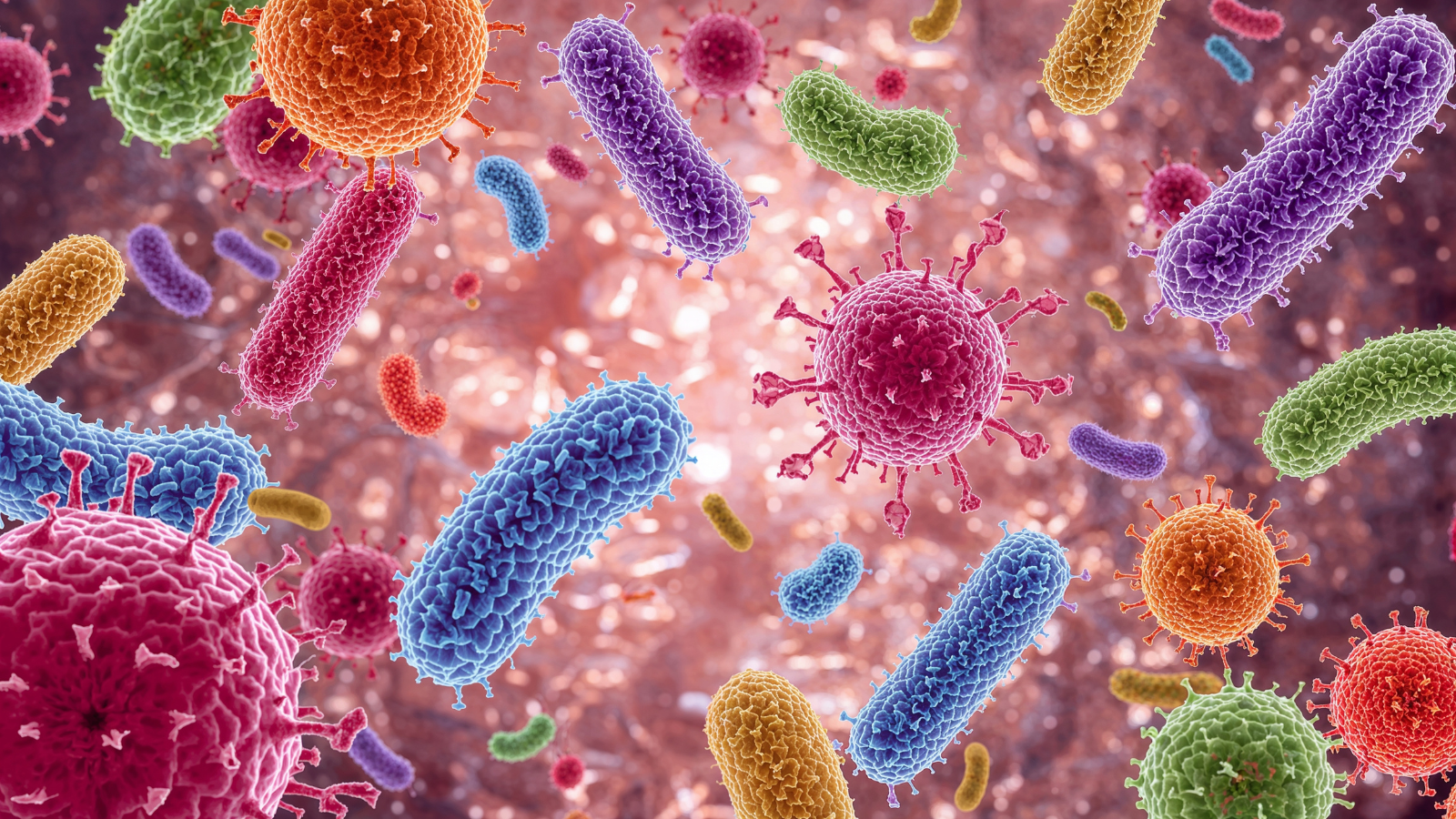
Our gut microbiome consists of trillions of bacteria, fungi, viruses, and other microorganisms that live in our digestive tract. Often overlooked in conventional medicine the gut microbiome has a huge role in many of our body systems above and beyond just supporting digestion. This includes our brain/nervous system, mood, immune health and infections, cardiovascular health and cholesterol, weight loss and metabolism, hormonal imbalances, inflammation, prevention of chronic disease, skin health, detoxification/liver health and even longevity.
Certain bacteria in our gut are responsible for making short chain fatty acids (SCFAs) such as propionate, butyrate and acetate and these play a key role in metabolism, reducing inflammation, neurological protection, cognitive function and appetite regulation but to name a few.
Often doctors will complete various tests, but rarely (if any) do they complete a comprehensive analysis of their client’s gut microbiome. That is just not a typical part of their training and it might be that you need to explore health professionals that specialize or offer this service such as Naturopath Doctors, specialized doctors and certain nutritionists and dietitians.
Brain and Nervous System (Gut–Brain Axis)
Our gut microbiome plays a pivotal role in our brain and can heavily influence our mood, behaviors, motivation and cognition. It does this in many ways. Firstly it can help with neurotransmitter production: Gut microbes help make and influence serotonin, dopamine, GABA, acetylcholine, and melatonin which are all crucial for attention, motivation, mood, memory, focus, relaxation and sleep. (1) Growing research shows that a balanced microbiome helps to support emotional stability and can reduce the risk of anxiety and depression. Microbes such as Lactobacillus and Bifidobacterium species are able to produce the neurotransmitter GABA which interacts with the hypothalamic-pituitary-adrenal (HPA) axis, affecting cortisol and stress resilience helping us to feel relaxed and calm. (2)
Healthy gut bacteria has also been shown to help improve memory, learning, and reduce risk of neurodegenerative diseases such as Alzheimer’s, and Parkinson’s disease. (3)
Do you want to check if your gut microbiome environment and level of short chain fatty acids is set up to make neurotransmitters effectively or if you have enough lactobacillus and bifidobacterium to help support healthy GABA levels and better manage stress?… then keep reading…
Immune System
Our gut is an open system from our mouth to our anus making it the entry point for pathogens such as viruses, bacteria and fungi to enter our bodies. Therefore our microbiome has to play a pivotal role in supporting the gut to help fight of these foreign invaders. It does this by “teaching” our immune cells on how to distinguish between harmful and harmless microbes. (4)
A healthy gut flora helps to strengthen our intestinal wall, preventing intestinal permeability otherwise known as “leaky gut”. Leaky gut can create systemic inflammation, autoimmune problems, malabsorption and nutrient deficiencies as well as keeping the blood brain barrier open and exposing it to toxins and other harmful chemicals. Butyrate is a short chain fatty acid made by certain bacteria in our gut that’s helps maintain the integrity of our gut lining (tight junctions, mucus production) and avoid these issues from occurring. (5)
Anti-inflammatory Signaling: fiber-fermenting bacteria such as Faecalibacterium prausnitzii, Roseburia spp., Eubacterium spp. help produce short-chain fatty acids like acetate, propionate, and butyrate that all help calm gut, boost the immune system and reduce systemic inflammation. (6) Good bacteria in the gut competes with harmful microbes for nutrients and space, producing natural antibiotics (bacteriocins).
Digestive Health
Gut microbiome is most commonly known for it’s role in supporting healthy digestion. Many gut bacteria (such as Roseburia intestinalis, Eubacterium rectale, Clostridium leptum group, Akkermansia muciniphila, Bifidobacterium) ferment indigestible polysaccharides such as dietary fiber, resistant starch, and oligosaccharides which help produce short chain fatty acids such as acetate, propionate, butyrate. These all help to nourish and support colon cells, supporting an overall healthy digestion. (7)
Having a healthy gut with good levels of healthy bacteria can help to absorb minerals like calcium, magnesium, and iron more effectively and specific bacteria such as Clostridium scindens help with bile acid metabolism to support fat digestion and regulate our cholesterol. (8)
Metabolism and Weight Regulation
Often overlooked as a tool for weight loss and weight management our gut microbiome plays a role in our metabolism and weight loss goals. It does this through a number of different ways. Firstly our microbiome feeds off the food that we eat and as such it can extract additional calories from food through fermentation, that means less calories for our body to process.
It supports blood sugar balance as short chain fatty acids (which certain gut bacteria can make) can help improve insulin sensitivity and glucose metabolism supporting weight loss and reducing the risk of type 2 diabetes. (9) If someone has unstable blood sugars they have 3 times more difficulty losing weight.
Some microbes influence how much fat your body stores and how it uses energy. Roseburia spp. and Faecalibacterium prausnitzii have been negatively correlated with metabolic disorders; their depletion is often seen in obesity or type 2 diabetes. (10) Certain microbes in our gut affects hunger hormones like ghrelin, leptin, and peptide YY, influencing cravings and satiety.
The compound propionate which is made from certain bacteria in our gut such as Bacteroides, Prevotella, Veillonella, etc. can stimulate satiety via the gut–brain axis and reduce the amount of food a person will eat. (11) Akkermansia is a bacteria that acts as a GLP1 regulator similar to that of Ozempic. If you have low levels then you may be struggling to lose weight despite your best efforts with exercise and diet.
Do you want to know if you have healthy Akkermansia in your gut?
I have seen firsthand a client that could not lose weight despite their best efforts to follow a weight loss plan. It turned out after microbiome testing she had absolutely no Akkermansia in her gut and a number of high pathogens that were contributing to her inflammation and high cholesterol.
If you want to find out more about key microorganism the their by products that help support weight loss (or hinder it) check out our article, Is Your Gut Microbiome The Reason Why You’re Not Losing Weight?
Skin Health
Many skins problems are a result of issues inside of us and often issues in relation to our gut health. Specific gut microbes can reduce systemic inflammation which influences skin conditions linked to psoriasis, eczema, rosacea, acne, and atopic dermatitis, while others can contribute to it. (14) A healthy gut flora helps support vitamin synthesis (especially B vitamins, and vitamin K) which are vital for skin health. (15)
Signals from the gut microbiome influence skin barrier strength and hydration. Some microbes produce metabolites (e.g. SCFAs) that can reduce oxidative stress and influence skin barrier function supporting healthy skin.(16)
Vitamin and Nutrient Synthesis
Believe it or not but certain gut bacteria can influence our nutrient profile by helping to make vitamins or making minerals more bioavailable. For example Bifidobacterium, Lactobacillus, and others can synthesize certain B vitamins (B2, B12, folate, biotin, niacin, riboflavin) and vitamin K2 (menaquinone). This goes above and beyond what we get from food sources. (17) Bacteria in our gut can help liberate minerals such as calcium, magnesium, iron (e.g. via deconjugation, acidification) more bioavailable. (18)
Inflammation and Chronic Disease Prevention
Inflammation is a root cause of some many health issues and diseases. Although diet can increase or decrease inflammation in the body so to can our gut microbiome. Butyrate and other SCFAs produced by our gut bacteria can help reduce systemic inflammation. Conversely, gut dysbiosis is associated with increased inflammation and numerous chronic diseases such as IBD, metabolic syndrome, autoimmune disease, and even cancer. (19) A diverse microbiome can also help to reduce the risk of autoimmune diseases such as rheumatoid arthritis, type 1 diabetes and multiple sclerosis. (20)
Our gut bacteria can also provide cancer protection. Certain microbes prevent DNA damage, support detoxification, and regulate cell growth which are all important to minimizing cancer risk. In colorectal cancer models, certain bacteria (e.g. F. prausnitzii) may inhibit tumor growth through anti-inflammatory and barrier-protective mechanisms. (21)
Development and Longevity
Early life colonization by specific microbes (e.g. Bifidobacterium spp., Akkermansia, Bacteroides) helps shape a healthy microbiome composition in infancy which helps shape the babies immune, metabolic, and brain development. That is why babies born through the vaginal canal are able to pick up a lot of their mothers microbes and tend to have better immune systems than those delivered via C-section. (22)
A diverse microbiome correlates with healthier aging, reduced frailty, and improved longevity. It contributes to maintaining metabolism regulation, keeping inflammation low, and ensuring barrier integrity. This can help support lifespan and reduce many age-associated disease risk. (23,24)
Summary
Our gut microbiome plays a critical role in our health from birth to old age. Often our gut health gets overlooked in conventional medical practice and can be the missing piece to ongoing health struggles that you may have. Our gut microbiome plays a role in making neurotransmitters to support our mood, attention, motivation and memory. It can be a missing link in people with depression that have not been successful with anti-depressants. It plays a role in weight loss, appetite regulation and glucose metabolism and having imbalances may be a reason for unwanted weight gain or to being unable to lose weight despite your best efforts with diet and exercise.
Having unhealthy balance or over population of certain bacteria can contribute to inflammation, chronic fatigue, high cholesterol, hypertension, autoimmune disease, and certain skin issues such as acne, eczema, and psoriasis. But this is still only a glimpse into the extensive role that our gut microbiome has on our overall physical and mental health.
Interested in finding out more about your gut microbiome?
At Koru Nutrition, we complete gut microbiome testing.
This helps to identify levels of various healthy bacteria as well as certain bad bacteria, and other inflammatory pathogens including but not limited to candida, fungi, protozoa and parasitic infections. It also looks at neurotransmitter producers in your gut (dopamine, serotonin, Gaba, acetylcholine, norepinephrine) vitamin producers, inflammation and toxic producers, short chain fatty acid producers, digestive markers, and longevity markers.
Click here to see the sample of the report.
Interested in getting the test? Please reach out to us at [email protected] to find out more.
References
- https://www.sciencedirect.com/science/article/pii/S2667242125001216/
- https://pubmed.ncbi.nlm.nih.gov/40360779/
- https://www.frontiersin.org/journals/microbiology/articles/10.3389/fmicb.2018.01835/
- https://pmc.ncbi.nlm.nih.gov/articles/PMC8608412/
- https://pubmed.ncbi.nlm.nih.gov/39284033/
- https://www.frontiersin.org/journals/endocrinology/articles/10.3389/fendo.2020.00025
- https://pmc.ncbi.nlm.nih.gov/articles/PMC10180739/
- https://www.nature.com/articles/s41392-024-01946-6
- https://pmc.ncbi.nlm.nih.gov/articles/PMC6244749/
- https://pmc.ncbi.nlm.nih.gov/articles/PMC10180739/
- https://www.nature.com/articles/s41392-024-01946-6
- https://pmc.ncbi.nlm.nih.gov/articles/PMC6244749/
- https://pmc.ncbi.nlm.nih.gov/articles/PMC8729913/
- https://www.frontiersin.org/journals/microbiology/articles/10.3389/fmicb.2018.01835/
- https://pubmed.ncbi.nlm.nih.gov/40360779/
- https://www.nature.com/articles/s41422-020-0332-7
- https://www.frontiersin.org/journals/microbiology/articles/10.3389/fmicb.2018.01835/
- https://www.frontiersin.org/journals/microbiology/articles/10.3389/fmicb.2018.01835/
- https://pmc.ncbi.nlm.nih.gov/articles/PMC10180739/
- https://pmc.ncbi.nlm.nih.gov/articles/PMC10180739/
- https://www.nature.com/articles/s41392-022-00974-4
- https://www.nature.com/articles/s41392-022-00974-4
- https://www.nature.com/articles/s41392-024-01946-6