The Power of Berries To Support Your Immune System

The Power of Berries To Support Your Immune System

The Power of Berries Koru Nutrition

Anthocyanins are a type of flavonoid, a class of compounds with antioxidant effects. Anthocyanins are the pigments that are responsible for giving fruits and vegetables their red, purple, and blue colours, which is commonly found in berries such as pomegranates, grapes, bilberryelderberry, black currants, blueberries, raspberries, blackberries, and cranberries.

Anthocyanins may offer anti-inflammatory, anti-cancer and even anti-viral, benefits. In fact studies show that there is a positive relationship between antiviral activity and polyphenol content of the berries, indicating the possibility that polyphenol is one of the key factors in the antiviral effects of berries (1,2). Studies have shown that anthocyanins can prevent influenza viruses from penetrating human cells and may inhibit viral release once the cell is infected (5).

With this in mind let’s have a look at how berries can help support our immunity.

Bilberries

Based on certain studies, the Vitamin C content in a bilberry is five times higher than that in an orange.

Researchers at the Washington University School of Medicine in St. Louis focused on the effects of flavonoids — antioxidants found in dark chocolate, bilberries and red wine — on intestinal microbiota, researchers found that these nutrients could “collaborate” with certain microbiota bacteria to combat influenza and other viral infections. The results of the study indicate that interaction between the bacteria and the flavonoids does not target flu viruses directly, but rather stimulates a response that prevented the immune system from harming lung tissue (3) while fighting the illness.

Black Currant

Black currant seed oil contains a chemical called gamma-linolenic acid (GLA). Some research suggests that GLA might improve the immune system, making it more able to fight off disease. Blackcurrants are also one of the densest known sources of the polyphenol antioxidant class called anthocyanins, which have been shown to help our immune system defend us against other viral infections, such as those that cause enteritis and common colds (4).

Researchers at Japan’s Asahikawa Medical College examined the effects of blackcurrants against influenza virus A and B (IVA and IVB).  The results showed both viruses were inactivated up to 99.9%. When IVA-infected cells were treated with blackcurrant extracts, the virus was completely suppressed in six hours. This study showed that not only can blackcurrant extracts inhibit IVA and IVB on contact, they also may prevent further infection by blocking the viruses’ ability to leave infected cells (4).

Increasing evidence suggests anthocyanins may support immunity by making the immune system more efficient at fighting and clearing a virus when it does encounter one (6,7). The way the polyphenol anthocyanins in blackcurrants work with the immune system means that if we do get sick, the severity and subsequent tissue damage from the infection may be decreased (8), thus allowing us to recover faster.

Pomegranate

Limited studies have been conducted on the antiviral activities associated with pomegranate and its extracts. Despite this, the studies that have been completed have identified anti-viral effects against clinically relevant influenza virus, herpes virus, poxviruses, and human immunodeficiency (HIV-1) virus [10–12].

Haslam (13) suggested that plant polyphenols exert a direct action on the viral particles, inhibiting the adsorption of the virus to the host cell receptors.

The tannins and anthocyanins are the main compounds associated with the beneficial effects of pomegranate consumption. In one study, the flavonoid, punicalagin found in pomegranate was shown to have inhibitory effects on influenza virus [15].  It is possible that pomegranate juice and extracts could be potentially useful in inhibiting viruses transmitted via infected food products, bodily fluids, and so forth (16).

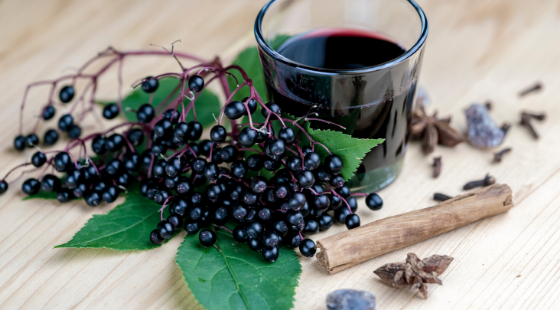
Elderberry

The elderberry is reputed by some to be effective in treating the common cold, flu, and sinus infections. It also has antiviral properties that may prevent or reduce the severity of certain common infections. In fact, a study completed in 2012 suggested that elderberry could help prevent influenza infection by stimulating an immune response (17) and a 2019 study on elderberry for both cold and flu suggested that the fruit substantially reduced upper-airway symptoms (18).

A 2016 study from Australia reported that, among 312 long-haul airline passengers, those who used elderberry extract 10 days before and five days after their flight had 50 percent fewer sick days resulting from a cold than those who didn’t. What elderberry did not appear to do was reduce the risk of getting a cold; both the elderberry group and placebo group had more or less the same number of infections (19), but in the passengers who used elderberry symptoms were less severe based on a scoring of upper respiratory tract symptoms.

Cranberry

The study, published in Nutrition Journal, found that individuals who drank a low calorie cranberry beverage with similar polyphenol content to cranberry juice cocktail every day for 10 weeks had nearly five times more growth of immune-boosting cells and significantly fewer cold and flu symptoms than non-cranberry consumers. Researchers observed that the fruit’s immunity benefits came from the presence of yδ-T cells, which are the body’s first line of defence against harmful bacteria. By improving their function, scientists believe we can reduce the number of symptoms associated with the common cold and flu (20).

Summary

To support your immune system and potentially help reduce respiratory virus symptom severity, make sure you consume your berries every day! Put them in salads, smoothies, yogurt or oatmeal, or even on their own as a healthy snack.

For inspiration to include more berries in your diet, check out our Berry Beet Smoothie Bowl.

Or, if you struggle to get berries into your diet or to eat enough variety of berries you may want to explore a whole food berry supplement.


References

  1. Duymuş HG, Göger F, Başer KH. In vitro antioxidant properties and anthocyanin compositions of elderberry extracts.Food Chemistry. 2014 Jul 15;155:112-9. doi:10.1016/j.foodchem.2014.01.028
  2. J Sci Food Agric. 2013 Jul;93(9):2239-41. doi: 10.1002/jsfa.6031. Epub 2013 Jan 28. Relationship between polyphenol content and anti-influenza viral effects of berries. Sekizawa H1, Ikuta K, Mizuta K, Takechi S, Suzutani T.
  3. Ashley L. Steed, George P. Christophi et al The microbial metabolite desaminotyrosine protects from influenza through type I interferon, Science 04 Aug 2017:Vol. 357, Issue 6350, pp. 498-502
  4. https://www.ncbi.nlm.nih.gov/pubmed/24660461
  5. https://www.ncbi.nlm.nih.gov/pubmed/17572513
  6. http://www.nzblackcurrants.com/assets/images/Health-Benefits-review-updated-9-November-2012.pdf
  7. https://www.ncbi.nlm.nih.gov/pubmed/17634269
  8. https://www.ncbi.nlm.nih.gov/pubmed/20229526
  9. https://www.ncbi.nlm.nih.gov/pubmed/18241960
  10. Haidari, M. Ali, S. W. Casscells, and M. Madjid, “Pomegranate (Punica granatum) purified polyphenol extract inhibits influenza virus and has a synergistic effect with oseltamivir,” Phytomedicine, vol. 16, no. 12, pp. 1127–1136, 2009.View at: Publisher Site | Google Scholar
  11. Neurath, N. Strick, Y. Y. Li, and A. K. Debnath, “Punica granatum (pomegranate) juice provides an HIV-1 entry inhibitor and candidate topical microbicide,” in Natural Products and Molecular Therapy, G. J. Kotwal and D. K. Lahiri, Eds., vol. 1056, pp. 311–327, New York Academy of Sciences, 2005.View at: Google Scholar
  12. J. Kotwal, “Genetic diversity-independent neutralization of pandemic viruses (e.g. HIV), potentially pandemic (e.g. H5N1 strain of influenza) and carcinogenic (e.g. HBV and HCV) viruses and possible agents of bioterrorism (variola) by enveloped virus neutralizing compounds (EVNCs),” Vaccine, vol. 26, no. 24, pp. 3055–3058, 2008.View at: Publisher Site | Google Scholar
  13. Haslam, “Natural polyphenols (vegetable tannins) as drugs: possible modes of action,” Journal of Natural Products, vol. 59, no. 2, pp. 205–215, 1996.
  14. Aviram, N. Volkova, R. Coleman et al., “Pomegranate phenolics from the peels, arils, and flowers are antiatherogenic: studies in vivo in atherosclerotic apolipoprotein E-deficient (E-o) mice and in vitro in cultured macrophages and upoproteins,” Journal of Agricultural and Food Chemistry, vol. 56, pp. 1148–1157, 2008.View at: Google Scholar
  15. G. Kasimsetty, D. Bialonska, M. K. Reddy, C. Thornton, K. L. Willett, and D. Ferreira, “Effects of pomegranate chemical constituents/intestinal microbial metabolites on CYP1B1 in 22Rv1 prostate cancer cells,” Journal of Agricultural and Food Chemistry, vol. 57, no. 22, pp. 10636–10644, 2009.View at: Publisher Site | Google Scholar
  16. https://www.hindawi.com/journals/ecam/2013/606212/
  17. Kinoshita E, Hayashi K, Katayama H, Hayashi T, Obata A. Anti-influenza virus effects of elderberry juice and its fractionsBiosci Biotechnol Biochem. 2012;76(9):1633–1638. doi:10.1271/bbb.120112
  18. Hawkins J, Baker C, Cherry L, Dunne E. Black elderberry (Sambucus nigra) supplementation effectively treats upper respiratory symptoms: A meta-analysis of randomized, controlled clinical trials. Complement Ther Med. 2019;42:361–365. doi:10.1016/j.ctim.2018.12.004
  19. Tiralongo E, Wee S, Lea R. Elderberry supplementation reduces cold duration and symptoms in air-travellers: A randomized, double-blind placebo-controlled clinical trial. Nutrients. 2016;8(4):182. doi:10.3390/nu8040182.
  20. https://nutritionj.biomedcentral.com/articles/10.1186/1475-2891-12-161
Why Your Child May Be A Picky Eater

Why Your Child May Be A Picky Eater

Why is My Child a Picky Eater? Koru Nutrition

As a mom it is not uncommon to get frustrated with your kid’s fussy eating patterns. However for moms with kids on the autism spectrum picky eating is an even more common issue.

You may think your child is just being stubborn and unreasonable at mealtime, but there are actually a number of biochemical reasons why a child might have a very limited repertoire of foods that they will consume or are refusing to eat certain meals altogether. In fact, a child’s picky eating could be based on a number of reasons, including:

  • sensory issues
  • oral motor problems
  • nutrient deficiencies
  • anxiety
  • food addictions/cravings
  • chemical addicitions to additives, preservatives and colourings

Food Addictions

Children often become “addicted” to foods that their body has difficulty processing. When certain, specific, “addicted” food proteins enter the blood stream, the body creates a compound that mimics the effect of morphine. Common foods that may cause this effect include dairy and gluten as they can create opiate-like response in the brain, making the child feel good in the short term. Unfortunately, that opiate-like response causes the child to restrict other foods to help fuel the addictive cycle and creates very picky eating.

Fear/Anxiety of New food

Being nervous about consuming a new food is a common developmental step in children between the ages of 2 to 3, but if this continues after this then there maybe an underlying issue such as oral motor issue, sensnory issue, or anxiety. One study identified that caregivers tried offering a new food a maximum of 3-5x before deciding that the child disliked it. However, the research shows that a caregiver needs to provide many more repeated exposures up to 8-15 times before the child would accept the new food. (Carruth, Ruth, Ziegler, Gordon, Barr, 2004). So, persevere it might not be enough exposures before the child feels comfortable consuming it.

Nutrient Deficiencies

Zinc is a nutrient that helps increase the sense of taste, smell and appetite. If your child has a nutrient deficiency, food may taste bad or bland, which can take away the pleasure of eating. A Survey of parent’s rating the efficacy with supplementing identified that austistic symptoms improved in 54% of children when the child was supplemented with zinc. It is recommended that blood tests be done to dtermine if there is a defeciencey before considering supplementing with zinc, but if that can not be done then taking a children’s multivitamin with a smaller dose might be a step in the right direction. Foods high in zinc to incorporate into the diet include: mushrooms, spinach, grass fed beef, lamb, summer squash, shrimp, pumpkin seeds, pumpkin seed oil, broccoli and sesame seeds.

Addictions to Chemicals (MSG, artificial additives)

Artificial food additives are often consumed in a typical Standard American Diet diet which consists mainly of processed foods that have a long shelf life. Addictions to these chemicals can cause restriction to specific brands or a large preference for processed foods. Addictions to salicylates, amines or glutamates can lead to a focus on foods high in these food chemicals, such as a diet high in fruit or fruit juice, tomato sauce, ketchup, and/or soy sauce (as examples), and avoidance of other food not high in them. MSG, in particular is neurodegenerative and contains glutamate that can excite the brain making the food taste more palatable, so subsequently the child craves that food. Removing these processed foods from your child’s diet may cause some withdrawal symptoms in the short-term, but the pay-off will be well worth it in the long-term with improvements in behaviors and mood

Yeast, Viral and Microbial Overgrowth

in the gut can cause a child to gravitate toward high carbohydrate foods such as breads, pizza, pasta and sugar-based foods. Refined grains such as white bread, pizza and pasta are broken down in the body quickly (due to minimal fiber content which would slow the release down) into glucose. These pathogens thrive on glucose to help them proliferate and flourish. These “bad” or “opportunistic bacteria and microbes” in the gut can affect your child’s brain chemistry causing them to crave refined carbohydrates and sugar, which as a result can lead to avoidance of other foods.


Helpful Strategies

  1. Make food fun! You can create pictures on the plate with food and create stories from it.
  2. Get your child involved in the grocery shopping, meal preparation or even in growing foods at home. This can build comfort and familiarity with the food and a sense of accomplishment
  3. Remember you need to expose your child to a new food 8-15 times before they may accept this into their diet. So keep trying!
  4. Don’t get anxious or hung up on the outcome when trying new foods. Kids sense stress and anxiety and will feed on this and not the food.
  5. Sneaking or hiding foods inside other foods can be either a benefit or a detriment, depending on the child. Most childrem prefer to eat foods they are familiar, so pureeing vegetables inside muffins, pancakes, meatballs, or pasta sauce may sneak in a bit of extra nutrition undetected. However, for some children with severe difficulty feeding, this strategy may cause them to lose trust or refuse a previously accepted food because there was something different about it. Hiding new foods or trouble foods inside other recipes is only recommended if that is a strategy has worked before or parents feel confident it won’t be a problem.

If you would like more information on this or would like to speak to one of our nutritionists specialized in working with kids on the autism spectrum please contact us.

How Nutrition Can Support or Hinder Brain Injury Recovery

How Nutrition Can Support or Hinder Brain Injury Recovery

Top 5 Foods to Boost Brain Power Blueberries Koru Nutrition

The human brain requires a huge amount of energy to function efficiently. After a traumatic brain injury, the brain requires even more energy to allow repair to occur. Following a brain injury one major key to recovery is to promote neuroplasticity – that is, enabling the brain to make new connections and pathways to regain function.

Nutrition is often overlooked as a factor that can either support or hinder brain injury recovery, depending on an individual’s eating habits. We know there are specific compounds in foods that effect the production of Brain-Derived Neurotropic Factor (BDNF), which is a protein in the family of growth factors that is produced by the human body and plays an integral role in the survival and growth of brain cells.¹ BDNF contributes to the plasticity of neurons, which is essential for recovery, learning and memory.

Let’s look more closely at how food can support or hinder brain injury recovery!

Top 2 Foods To Avoid Post-Brain Injury

These Foods Reduce Neuroplasticity

1. Alcohol

We’ve probably all heard the adage that “alcohol kills brain cells”. The science is a bit more complicated than that, but it’s true that even moderate alcohol intake can decrease neuroplasticity as well as increasing inflammation within the brain.² This is important to know because sustained inflammation within the brain leads to further damage and impairments in cognitive function.

2. Sugar

Sugar increases inflammation and oxidative stress (an imbalance of free radicals and antioxidant in the body that can lead to tissue damage). Diets high in refined sugar down-regulate several key factors needed for brain function and repair including neurotransmitters. A diet high in refined sugars also impairs the gut microbiome (the bacteria and fungi that live in our guts), which directly impacts the brain via the gut-brain axis. Put plainly, anything damaging the gut is also harming the brain, and vice versa.³

Top 4 Foods To Consume Post-Brain Injury

These Foods improve Neuroplasticity

1. Berries

Berries as a group are high antioxidants and known for their protective effects. The antioxidants present in berries can help protect the brain from secondary damage and functional decline, as well as reduce inflammation.

2. Egg Yolk

Egg yolk is high in the nutrient choline, which is an essential component of all cell membranes and especially critical for communication between brain cells. Choline has neuroprotective effects and promotes rapid repair of damaged cells – exactly what is required post-brain injury!4

3. Non-starchy vegetables

Caloric restriction may benefit individual’s post-brain injury as their body focuses on recovery. In fact, research shows that calorie restriction has beneficial effects on brain plasticity and neuronal vulnerability to injury and can stimulate production of BDNF.5 As such, vegetables like kale, broccoli, asparagus, celery, or cucumber, that provide dense nutrition and satiety without an abundance of calories should be considered as the base of an individual’s diet.6

4. Oily Fish

One of the most important and well-researched dietary factors that relates to brain health is fish-derived Omega 3 fatty acids. Not only do Omega 3 fats assist in reducing inflammation within the brain and helping to prevent secondary damage, but DHA (one specific Omega 3 fat) is known to facilitate brain cell recovery and the development of new brain pathways post-injury.7

If you or someone you know has suffered a traumatic brain injury, please consider the significant positive impact that changes in nutrition can have on recovery. A skilled dietitian or nutritionist, like those at Koru Nutrition, can help you navigate what dietary changes are best for you, and provide you with the tools and skills to implement new habits. Get in touch by email or book a session now, we’re here to help!


References:

¹ https://www.ncbi.nlm.nih.gov/pmc/articles/PMC4697050/

² https://www.ncbi.nlm.nih.gov/pmc/articles/PMC4342330/

³ https://www.ncbi.nlm.nih.gov/pmc/articles/PMC6025245/

https://www.ncbi.nlm.nih.gov/books/NBK209327/

https://link.springer.com/article/10.1385/JMN:16:1:1

https://www.ncbi.nlm.nih.gov/pmc/articles/PMC4672013/

https://www.ncbi.nlm.nih.gov/pmc/articles/PMC3225186/

Best Foods To Manage Your Stress

Best Foods To Manage Your Stress

stress busting foods koru nutrition

The key to busting stress is making sure that you look after YOU. Have a look at your work life, your personal life and social life to see if there are any areas you can create more happiness. You might be surprised on what you find.

Stress Busting Foods

What are some of the best foods to eat for stress?

  • Fatty fish such as wild salmon and sardines contain omega-3 fats which have anti-inflammatory properties that may help counteract the negative effects of stress (vi).
  • Dark leafy greens such as kale, spinach and Swiss chard are rich in folate that is needed to produce dopamine and serotonin- pleasure inducing neurotransmitters that helps keep you calm (vii).
  • Fermented foods such as kimchi, kombucha, and sauerkraut contain beneficial bacteria that may positively impact your mood and brain health (viii).
  • Seeds such as flaxseeds, sunflower seeds, and pumpkin seeds are great sources of Magnesium, which acts as a precursor for neurotransmitters like serotonin, important for improving mood (viiii).

To find out more about how nutrition impacts your health, Koru offers comprehensive individualized nutrition programs.


References:

vi. Antidepressant-like effects of uridine and omega-3 fatty acids are potentiated by combined treatment in rats Carlezon, William A. et al. Biological Psychiatry , Volume 57 , Issue 4 , 343 – 350

vii. The association of folate and depression: A meta-analysis.

viii. Stress & the gut-brain axis: Regulation by the microbiome.

viiii. Role of Magnesium supplementation in the treatment of depression: A randomized clinical trial

Benefits of Moringa, The New Superfood

Benefits of Moringa, The New Superfood

benefits of moringa new superfood koru nutrition

Heard of Moringa before? You might want to go and get some after reading this….

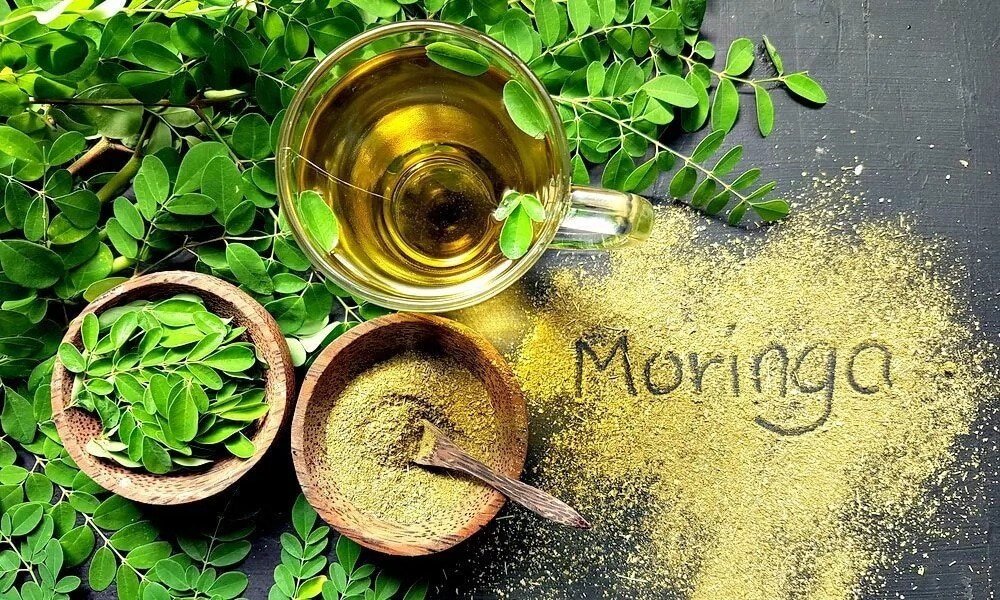
Moringa (moringa oleifera) is also known as the Ben Oil Tree, Drumstick Tree, or Indian Horseradish. Moringa is a fast- growing tree typically cultivated in India, tropical Asia, Africa and Latin America, yielding long seed pods that resemble drumsticks, hence the name Drumstick Tree.

Moringa has long been used in eastern medicine to treat many ailments such as low energy, adrenal fatigue and helps to naturally detox the liver just to name a few. As a dietary supplement, Moringa is high in protein, B vitamins, vitamins A and C and contains minerals such as calcium and iron.

It is also rich in flavonoid, a class of compounds found in plants that contribute to essential plant functions. According to the Food and Agriculture Organization of the United Nations, “Moringa products have antibiotic, hypotensive, anti-spasmodic, anti-ulcer, anti-inflammatory, and blood sugar balance properties”. In essence, this makes Moringa a new superfood that is nutritious and medicinal.

Moringa is particularly mentioned in Ayurvedic treatments as the most nutritious tree in India. In traditional Indian Ayurvedic treatments, moringa is used as a natural and safe detox, often used as a regular tonic of the body. Apart from wellness from within, moringa leaves and barks can be processed into a balm for external application, alleviating joint pains and rheumatism as the plant has a mild analgesic effect. It’s no wonder the Moringa plant is now being hailed as the latest superfood.

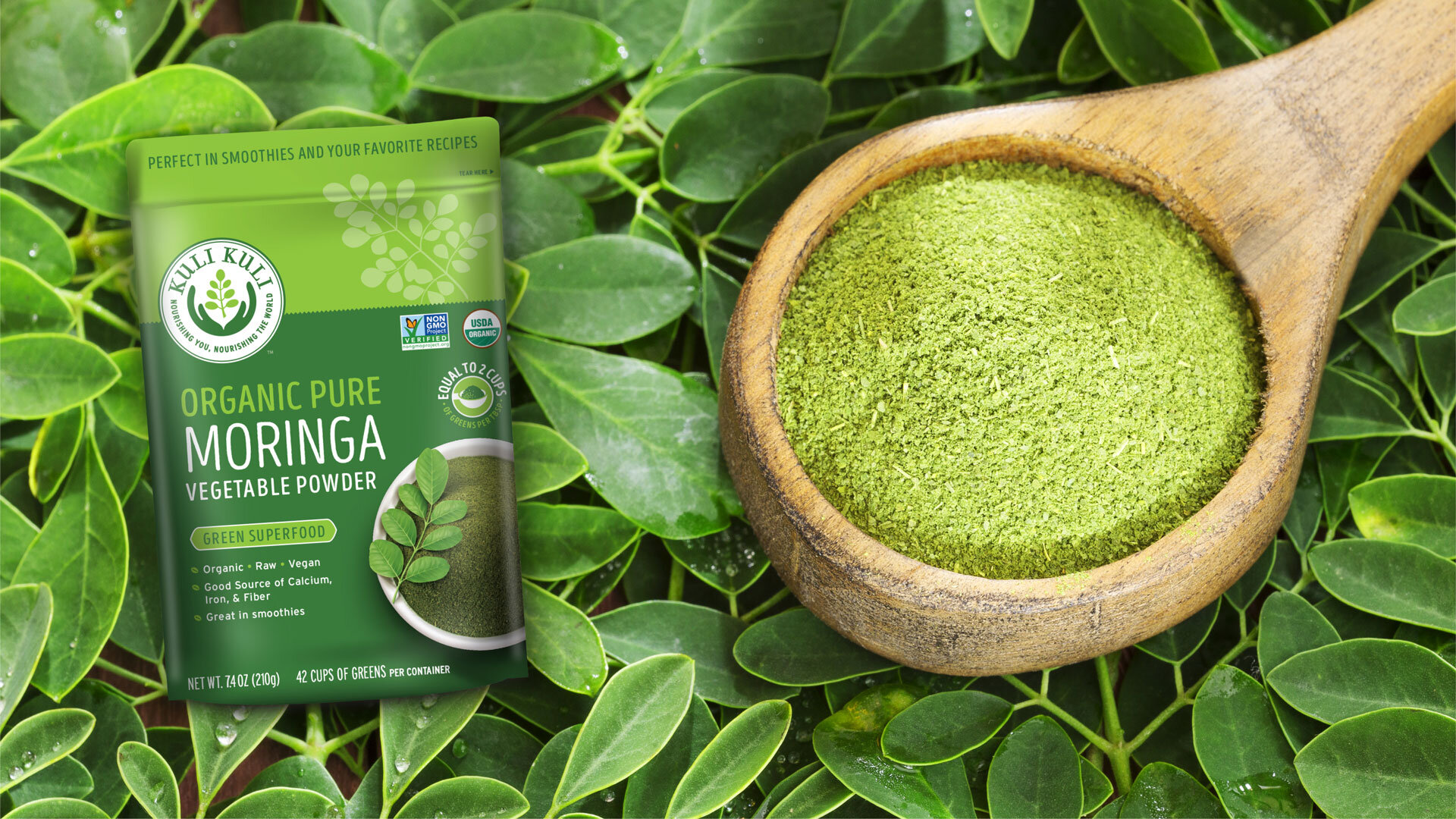
In the western world, Moringa products come in various forms, with the most convenient and widely-available form being Moringa powder ground from dried leaves and taken as a supplement in pill form.

organic pure moringa vegetable powder koru nutrition


Some of the Wonderful Health Benefits of Moringa:

  • Traditionally used as an aphrodisiac to support a healthy sex drive, and showing promise in clinical studies for male sexual enhancement (v).
  • It’s nutrient-packed. Moringa contains vitamins A, C, and E; calcium; potassium; and protein.
  • Fights free radicals – molecules that cause oxidative stress and cell damage (i).
  • It fights inflammation – helping to prevent chronic diseases like diabetes, respiratory problems, cardiovascular disease, arthritis, and obesity (ii) (iii).
  • Reduces diabetes symptoms by reducing lipid and glucose levels (iv).
  • Protects cardiovascular system – prevents plaque formation and reduces cholesterol levels.
  • Protects the liver with high concentrations of polyphenols. 
  • Has antimicrobial and antibacterial properties to fight infections.

How to Use Moringa

Here is your guide to taking Moringa in all it’s forms so you can start benefiting from this wondrous superfood.

In Pill Form

Due to different manufacturing styles and ways to process the plant, the dosage can be varied. Always check the label for recommended dosage given they have different concentration of active ingredients. Usually it’s one pill per day.

In Powder Form

For Moringa leaf powder, it is typically sold in packets or jars. For the most effective health benefits, it’s best taken raw, as heat may destroy some of the useful and healthful compounds. The general instructions for various brands seem to suggest starting off slow and adding more powder day by day in order for the body to get used to the detoxifying qualities of Moringa. Start off with a quarter teaspoon added to your smoothies, iced tea, water or sprinkled on your breakfast such as yoghurt or chia pudding and slowly build up to 1 tablespoons a day.

Seeds and Leaves

You might come across roasted whole Moringa seeds or even whole leaves. These are usually hard to come by so if you want to use these, it’s best to check your local health food store, Asian markets or Traditional Chinese Medicine practitioners. The seeds are typically bitter and astringent though; how much you use will depend on personal taste. To use Moringa seeds, remove the shell and chew five to ten seeds a day if possible, or grind them into powder and sprinkle on your food.

When it comes to cooking Moringa leaves and seeds, the spices used in Indian cooking, such as cumin and turmeric, complement the anti-inflammatory effect of Moringa. If eaten raw, start off with a quarter cup of leaves per day, and build up to half cup a day.

Precautions

No matter how you choose to have your Moringa for its therapeutic effect, the key is moderation and consuming it in line with you and your body. For some that means being able to handle more at first, for you it might be to only take a quarter of the recommended dosage.

Being a superfood, it’s important to remember that Moringa is ultimately not medication but a nutrient-rich food that supports a healthy diet and lifestyle. It’s not meant to be a superfood that gives you everything you need or a cure for all your ailments.

If you are pregnant, never consume Moringa tree bark or root as it could cause early labor or uterine contractions. If you are menstruating, it can cause excessive bleeding due to the detoxifying nature.

As always, consult your doctor before incorporating Moringa into your daily diet.

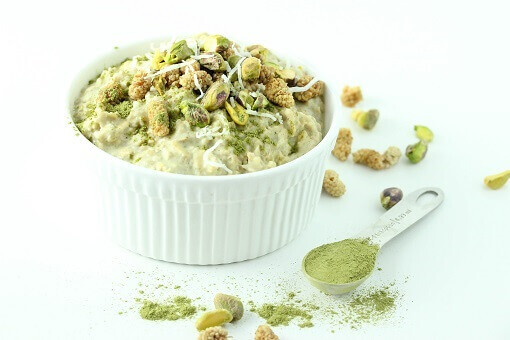
healthy moringa oatmeal recipe koru nutrition

 HEALTHY MORINGA OATMEAL

Turn your oatmeal into a nutrient-packed power breakfast with the addition of Moringa – ready in 10 minutes!

Ingredients:

  • 4 cups gluten-free rolled oats
  • 5 cups almond milk
  • 2-3 tbsp maple syrup
  • 2 tsp vanilla extract
  • 2-3 tsp moringa powder
  • 1/3 cup pistachios, chopped
  • 1/3 cup dried mulberries
  • 1/4 cup unsweetened shredded coconut
  • 2 tbsp chia seeds, optional

Instructions:

  1. In a medium sauce pan, add the rolled oats, milk, vanilla extract and maple syrup.
  2. Cook the mixture over low to medium heat, stirring occasionally, until some of the milk has been absorbed and the oats have softened, about 5-7 minutes.
  3. Turn the heat off and add the moringa powder and the remaining ingredients. Stir and serve.

*recipe adapted from The Nutty Scoop

References:

i. Food Chem Toxicol. 2009 Jun;47(6):1109-16. doi: 10.1016/j.fct.2009.01.034.
Oxidative DNA damage protective activity, antioxidant and anti-quorum sensing potentials of Moringa oleifera. Singh BN1, Singh BR, Singh RL, Prakash D, Dhakarey R, Upadhyay G, Singh HB.
ii. Pak J Pharm Sci. 2014 Mar;27(2):397-403. Review: an exposition of medicinal preponderance of Moringa oleifera (Lank.). Hussain S1, Malik F1, Mahmood S2.
iii. Bioorg Med Chem. 2010 Sep 1;18(17):6598-602. doi: 10.1016/j.bmc.2010.03.057. Epub 2010 Mar 29. Potential anti-inflammatory phenolic glycosides from the medicinal plant Moringa oleifera fruits. Cheenpracha S1, Park EJ, Yoshida WY, Barit C, Wall M, Pezzuto JM, Chang LC.
iv. Eur Rev Med Pharmacol Sci. 2011 Jul;15(7):803-8. Alpha-glucosidase inhibitory activity and lipid-lowering mechanisms of Moringa oleifera leaf extract. Adisakwattana S1, Chanathong B.
vi. J Zhejiang Univ Sci B. 2015 Mar; 16(3): 179–190. Moringa oleifera extract enhances sexual performance in stressed rats. Thawatchai Prabsattroo et al.

The Amazing Health Benefits of Eggs

The Amazing Health Benefits of Eggs

the amazing health benefits of eggs Koru Nutrition

Eggs are not only delicious, but are extremely nutritious. They are easy to digest, inexpensive, and suitable for every meal, but they also have impressive health credentials. Eggs contain the highest biological value for protein and offer all nine essential amino acids that cannot be made by humans and therefore must come from our diets.

A single large boiled egg contains:

  • 77 calories, 6 grams of protein, and 5 grams of healthy fats
  • Vitamin A: 6% of the RDA
  • Folate: 5% of the RDA
  • Vitamin B5: 7% of the RDA
  • Vitamin B12: 9% of the RDA
  • Vitamin B2: 15% of the RDA
  • Phosphorus: 9% of the RDA
  • Selenium: 22% of the RDA
  • Eggs also contain vitamin D, vitamin E, vitamin K, vitamin B6, calcium and zinc (i)

How to Buy Eggs

Shell colour depends on the breed of the chicken and has very little to do with nutritional content of an egg. However, a hen’s diet and environment can affect an egg’s nutrition. Eggs from hens that were raised on pasture and/or fed omega-3 enriched feeds tend to be much higher in omega-3 fatty acids. Omega-3 fatty acids positively impact many aspects of our physical and mental health and are known to reduce blood levels of triglycerides (ii). Some of the more common labels you may see on egg cartons include:

Cage-free eggs
The term “cage-free” may be misleading. It means hens are not confined to cages, but conditions are often still very crowded, with no access to the outdoors. As well, there are no assurances about what they are fed or what kinds of medications they are given.

Free-Range eggs

“Free-range” means hens have some form of continuous access to the outdoors.

Organic eggs

Organic eggs are certified and are from chickens given only organic feed without growth hormones or antibiotics. They must also have year-round access to the outdoors. A certified organic hens’ quality of life is better and contain higher levels of vitamin D since they are exposed to sunlight.

Benefits of Eggs

  1. Eggs rank high on the Satiety Index scale which means they may help you feel fuller for longer, mainly because of their high protein content. Foods high in protein have been known to reduce appetite, and increase fullness, compared to foods that contain less protein (iii).
  2. Eggs are an excellent source of choline which plays an important part in many body functions including cell structure, metabolism, DNA synthesis, muscle movement, brain development and memory (iv).
  3. Egg yolks contain large amounts of lutein and zeaxanthin which are very important for eye health and can help prevent macular degeneration and cataracts (v).

But what about cholesterol?

After years of being vilified for their high cholesterol content, overwhelming scientific evidence now suggests dietary cholesterol has little, if any impact on blood-cholesterol levels and that saturated and trans fat are the bigger culprits when it comes to raising blood cholesterol levels. As eggs are low in saturated fats, one egg per day been shown to be safe (vi) (vii). So feel free to enjoy eggs as part of a healthy, fibre rich diet which includes plenty of fruits and vegetables.

cheesy egg muffins recipe koru nutrition

Start your day off right with these grain-free egg muffin cups.They can easily be made in advance – perfect for busy mornings or as grab and go snacks.

CHEESY EGG MUFFINS RECIPE

Ingredients

  • 4 large eggs
  • 2 tablespoons of full fat Greek yogurt
  • Kosher salt
  • 3 tablespoons coconut flour
  • ¼ teaspoon baking powder
  • ½ cup of shredded Cheddar cheese
  • Freshly ground black pepper
  • 1-2 Tablespoons chopped fresh chives or herbs of choice (optional)

Instructions

  1. Preheat oven to 375 F. Line a muffin tray with parchment cupcake liners.
  2. In a medium sized bowl, whisk together eggs, yogurt, black pepper, and a dash of salt until blended.
  3. Add the coconut flour and baking powder and mix the batter until smooth.
  4. Mix in the cheese and fresh herbs (if using).
  5. Divide the batter into the 6 prepared muffin cups.
  6. Bake for approximately 20 minutes, rotating the tray halfway though the cooking time. (The tops of the muffins should spring back when you poke them with your finger.)

Recipe adapted from nomnompaleo.com

[su_spacer]

References:

i. nutritiondata.self.com

ii. Effects of omega-3 fatty acids on serum markers of cardiovascular disease risk: A systematic review
Balk, Ethan M. et al. Atherosclerosis , Volume 189 , Issue 1 , 19 – 30

iii. High protein diets and weight control. Clifton, P. Nutrition, Metabolism and Cardiovascular Diseases , Volume 19 , Issue 6 379 – 382

iv. J Inherit Metab Dis. 2011 Feb;34(1):3-15. doi: 10.1007/s10545-010-9088-4. Epub 2010 May 6. Choline and betaine in health and disease. Ueland PM1

v. Effect of Lutein and Zeaxanthin on Macular Pigment and Visual Function in Patients with Early Age-related Macular Degeneration Ma, Le et al. Ophthalmology , Volume 119 , Issue 11 , 2290 – 2297

vi. Rong Ying, Chen Li, Zhu Tingting, Song Yadong, YuMiao, Shan Zhilei et al. Egg consumption and risk of coronary heart disease and stroke: dose-response meta-analysis of prospective cohort studies BMJ 2013; 346 :e8539

vii. Jyrki K Virtanen et al; Associations of egg and cholesterol intakes with carotid intima-media thickness and risk of incident coronary artery disease according to apolipoprotein E phenotype in men: the Kuopio Ischaemic Heart Disease Risk Factor Study, The American Journal of Clinical Nutrition, Volume 103, Issue 3, 1 March 2016, Pages 895–901

[su_spacer]

For more information please contact us at:

[email protected] or call us 1855 385 5678 ex 801

To make a referral, please complete our online referral form