Turmeric Latte

Turmeric Latte

Two Glasses with Detox Green Smoothie

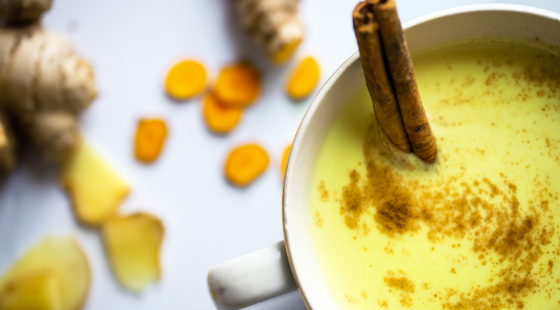
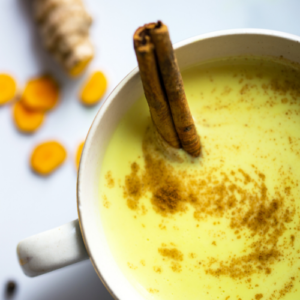
This delicious soothing latte is packed full of anti-inflammatory benefits and is a great beverage for those struggling with pain.

Turmeric is the star of this recipe! Turmeric’s active component is curcumin which has shown to have anti-inflammatory and antioxidant properties.

Because of these health benefits, curcumin has been shown to help with pain with individuals with rheumatoid arthritis, and was found to be more effective than an anti-inflammatory drug. In individuals with osteoarthritis, participants reported improvement in pain, physical function, and quality of life after taking curcumin, with decreased use of pain medication. Turmeric can cross the blood brain barrier and can support healthy brain function including helping with memory, attention, and can help with health conditions such as concussion, Alzheimer’s and Parkinson’s disease. You can read more about the health benefits of turmeric here.

The black pepper in the recipes is very important as this helps to increase the absorption of curcumin in the body by 2000%!

Ginger is antimicrobial, it has bene shown to help manage blood sugar levels, reduce feelings of nausea, and help with pain. Studies have shown that just a single gram of ginger a day can be enough to reduce both the duration of pain and the intensity with women with menstrual cramps and osteoarthritis. The studies show that it worked just as well as other well-known remedies such as ibuprofen. If you are on a lot of pain medications this may cause stomach ulcers and research has shown ginger can be effective at helping to prevent aspirin-induced stomach ulcers by blocking the activity of the enzymes responsible. Because ginger is antimicrobial, it can also help fight off bacterial, fungal and some viral infections.

Cinnamon is a great spice to incorporate into any diet because it helps with blood sugar regulation and it also contains anti-inflammatory and antioxidant properties especially in the digestive tract which makes it a valuable digestive aid. Plus, it’s delicious!

Coconut milk has a delicious creamy taste and has been shown to reduce stomach ulcer size in rats by 54% — a result comparable to the effect of an anti-ulcer drug. However, one cup of coconut milk can contain as much as 552 calories, so if weight loss if your goal then we suggest switching out coconut milk to a more low-calorie option such as almond or cashew milk, or diluting it half-and-half with water.

Turmeric Latte

This delicious soothing latte is packed full of anti-inflammatory benefits and is a great beverage for those struggling with pain.
Prep Time 5 minutes
Total Time 5 minutes
Servings 1 serving

Ingredients
  

  • ¾ cup Full Fat Coconut Milk canned
  • ¾ cup Water
  • 1 tsp Ground Turmeric
  • ¼ tsp Ground Ginger
  • ¼ tsp Ground Cinnamon
  • 1 pinch Ground Black Pepper
  • 2 tsp Maple Syrup (or honey) to taste
  • 1 tbsp Collagen Powder optional

Instructions
 

  • In a small saucepan over medium heat, add all ingredients and whisk until warm. Do not allow to boil.
  • Remove from heat, sample, and adjust flavours if desired.
  • Pour into your favorite mug and enjoy!

Notes

Nutritional information per serving:
Calories - 197
Sugar - 14g
Carbs - 24g
Fat - 12.1g
Protein - 0.4g

Top 5 Health Benefits of Turmeric

Top 5 Health Benefits of Turmeric

Detoxifying vegetables and fruits

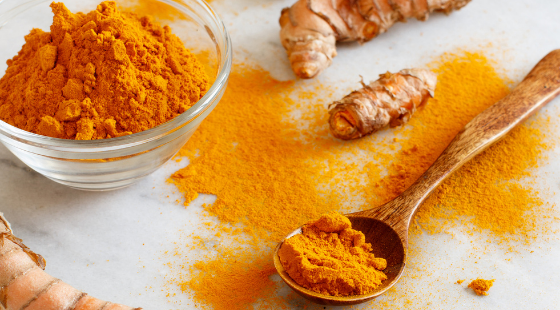
Turmeric is a plant native to Southeast Asia, grown primarily in India. Its an underground stem, which has an appearance similar to ginger. Turmeric has been used since ancient times as a culinary spice and in traditional Ayurvedic medicine. In fact, it’s use in treating various health issues such as respiratory diseases and skin conditions can be found back to as far as 500 B.C. It has a vibrant yellow-orange colour and earthy flavor, and is one of the main ingredients in curry powder.

Fresh or powdered turmeric is often used in cooking. Because of its growing popularity it can often be found in smoothies and hot drinks. Although nowadays, turmeric and its extract, curcumin, are also available in supplement form.

The main active component of turmeric is curcumin, which has been found to have a wide range of health benefits (1). It is this compound and its health benefits that are making turmeric and curcumin supplements very popular. Turmeric and curcumin have also been well researched with many positive results. They have been found to be anti-inflammatory, antioxidant, anti-microbial and is high in fiber, vitamin C and iron.

What are the advantages of consuming of turmeric, you ask?

Below, we have a look at 5 health benefits of turmeric:

  1. Powerful Antioxidant 

    Free radicals are formed by toxins in our environment, air, food that we eat and even through exercise. If there are too many free radicals in the body, then this can cause cellular and tissue damage and contribute to the onset of illness and disease. Antioxidants help prevent cellular damage by protecting your body from free radicals. Not only does curcumin itself act as an antioxidant by neutralizing free radicals in the body, it can support the functioning of glutathione, a potent antioxidant produced by the body. (2)

  2. Anti-Inflammatory

    Turmeric and curcumin can help protect the body against chronic inflammation that contributes to diseases such as arthritis, cancer, and heart disease. In one study of people with rheumatoid arthritis, curcumin was found to be more effective than an anti-inflammatory drug. (3) In a review of the effects curcumin has on osteoarthritis, participants reported improvement in pain, physical function, and quality of life after taking curcumin, with decreased use of pain medication. (4)

  3. Supports Brain and Neurological Health

    Research has supported curcumin’s use with concussion and various other neurological and brain conditions. The reason being is that curcumin can cross the blood brain barrier and works as an antioxidant by protecting the loss of neurons, one of the main processes that occur in the development of Parkinson’s disease. (11). Brain Derived Neurotrophic Factor (BDNF) is a growth hormone found in the brain that plays an important role in learning and memory. Curcumin has been found to increase brain levels of BDNF, helping to protect against brain diseases such as Alzheimer’s (5). It may even help reverse some of these effects, with research suggesting it can help enhance cognitive functioning, such as with memory and attention (6). Curcumin has also been found to have an antidepressant-like effect, providing a natural alternative to medication in some cases (7).  

  4. Cancer Prevention

    Due to its high antioxidant content and anti-inflammatory effects, curcumin has the potential to help prevent against many forms of cancer. Evidence suggests curcumin can prevent or slow the growth of tumours, destroying cancer cells and reducing its overall spread. (8)

  5. Protects Against Cardiovascular Disease

    Curcumin has also been shown to lower your risk of heart disease. Due to its anti-inflammatory effects, it can help decrease cholesterol levels to protect against atherosclerosis, and it can also prevent cardiovascular complications related to diabetes. Research showed that supplementation of curcumin before and after a coronary bypass surgery reduced the incidence of myocardial infarction post surgery. A 2017 of over 600 patients demonstrated a significant reduction in LDL (“bad” cholesterol”) and triglyceride levels with turmeric supplementation. (11) Animal studies have also found it can prevent heart failure. (9)

You are what you absorb!

Despite all these benefits, curcumin on its own is not easily absorbed by the body. But the good news is, by taking turmeric with a bit of black pepper, you can enhance how well the body absorbs the active component of turmeric by up to 2000%! So, when cooking with turmeric, make sure to sprinkle some pepper onto your dish as well. Turmeric and curcumin supplements should also contain black pepper or it’s active component, piperine, for optimal results. (10) Since curcumin is also fat-soluble, it is best to have with a meal that contains fat or oil.

How To Use Turmeric

Turmeric is a very versatile spice. Try:

  • Incorporating it in soups and curries
  • Sprinkling on roasted vegetables with a dash of black pepper
  • Add it to scrambled eggs or fritatas
  • Use it to flavour rice or other whole grains
  • Use in a marinade for chicken or fish
  • Try a turmeric latte or “golden milk.” 

Side Effects of Turmeric

Although turmeric has wonderful health properties it may have some side effects that you need to be aware of. It can lower blood pressure, which may not necessarily be a bad thing if you struggle with high blood pressure, but could be a challenge for individuals with already low blood pressure, or certain thyroid conditions. For a small percentage of individuals, turmeric may irritate the digestive tract which can potentially cause diarrhea or an increase in acid production, which in turn could lead to annoying heartburn.

Turmeric does contain oxalates, so it may contribute to kidney stone formation and should be avoided if you are at risk of kidney stones or are on a low-oxalate diet. People that have allergies to yellow food colouring or ginger are also likely to be allergic to turmeric. 

Summary

This spice packs a mighty health punch! It is a great option to incorporate into your meals with the help of some black pepper to increase absorption or get the concentrated benefits of taking it in supplement form. So, whether you’re new to consuming turmeric or not, we hope this article provided some insight into the powerful disease-fighting benefits that turmeric offers! 


References

1. https://www.nccih.nih.gov/health/turmeric  
2. https://pubmed.ncbi.nlm.nih.gov/15650394/  
3. https://pubmed.ncbi.nlm.nih.gov/22407780/  
4. https://pubmed.ncbi.nlm.nih.gov/27703331/ 
5. https://www.sciencedirect.com/science/article/abs/pii/S0006899306027144  
6. https://www.ncbi.nlm.nih.gov/pmc/articles/PMC3281036/ 
7. https://www.sciencedirect.com/science/article/abs/pii/S0166432812006997  
8. https://pubmed.ncbi.nlm.nih.gov/12680238/  
9. https://pubmed.ncbi.nlm.nih.gov/19233493/  
10. https://pubmed.ncbi.nlm.nih.gov/9619120/  
11. https://10faq.com/health/turmeric-benefits/6/ 


Golden Cauliflower Chicken Curry

Golden Cauliflower Chicken Curry

Two Glasses with Detox Green Smoothie

This one pan dish is a simple yet exciting, anti-inflammatory meal.

After a busy day with work, family, and errands, you can feel confident preparing this low-stress dish filled with important nutrients.

Not to mention – minimal dishes to clean up!

The cauliflower in this dish is an excellent source of Vitamin C. Vitamin C has been shown to act as an anti-inflammatory, reducing inflammatory markers in the blood (1).

Carrots contain carotene, which is a pigment molecule giving this vegetable is marked orange colour. Carotene has been shown to have anti-inflammatory properties and is protective against liver disease(2).

While these vegetables contain their own anti-inflammatory properties, adding turmeric is the secret powerhouse ingredient in this recipe! Turmeric is a strong spice with a bright golden colour. Its main component is curcumin which is a powerful anti-inflammatory compound. Curcumin has demonstrated the ability to reduce inflammation in a number of diseases including cancer, arthritis, and diabetes3. Daily intake of as little as 1 gram of curcumin has been shown to reduce blood markers of inflammation in individuals with metabolic syndrome (4). To learn more about the benefits of turmeric and its anti-inflammatory properties, read Koru’s recent article here! 

Extra virgin olive oil is another hidden gem in this recipe. Extra virgin olive oil is considered by many to be one the healthiest fats to consume. Many researchers have studied the effects of extra virgin olive oil through examining the Mediterranean diet, where extra virgin olive oil is a staple ingredient. These studies have demonstrated that individuals who consume a minimum of 50ml daily have lower levels of inflammatory markers in their blood (5).

If you’re feeling extra hungry, try adding a bit of coconut milk to the curry for a creamier texture!


  1. Chambial, S., Dwivdei, S., Shukla, K., John, O., & Sharma, P. (2013). Vitamin C in Disease Prevention and Cure: An Overview. Indian Journal of Clinical Biochemistry. 28(4), 314-328. doi: 10.1007/s12291-013-0375-3
  2. Yilmas, B., Sahin, K., Bilen, H., Bahcecioglu, I., Biliir, B., Ashraf, S., … & Kucuk, O. (2015). Carotenoids and non-alcoholic fatty liver disease. Hepatobiliary Surgery and Nutrition. 4(3), 161-171. doi: 10.3978/j.issn.2304-3881.2015.01.11
  3. Menon, V., & Sudheer, A. (2007). Antioxidant and anti-inflammatory properties of curcumin. Advances in Experimental Medicine and Biology. 595. 105-125. doi: 10.1007/978-0-387-46401-5_3.
  4. Panahii, Y., Hosseini, M., Khalili, N., Naimi, E., Majeed, M., & Sahebkar, A. (2015). Antioxidant and anti-inflammatory effects of curcuminoid-piperine combination in subjects with metabolic syndrome: A randomized controlled trial and an updated meta-analysis. Clinical Nutrition. 34(6), 1101-1108. doi: 10.1016/j.clnu.2014.12.019
  5. Casas, R., Sacanella, E., Urpi-Sarda, M., Chiva-Blanch, G., Ros, E., Martinez-Gonzalez, M., …& Estruch, R. (2014). The effect of the Mediterranean diet on biomarkers of vascular wall inflammation and plaque vulnerability in subjects with high risk for cardiovascular disease. A randomized trial. PLoS One, 9(6). doi: 10.1371/journal.pone.0100084


Golden Cauliflower Chicken Curry

This one pan dish is a simple yet exciting, anti-inflammatory meal. After a busy day with work, family, and errands, you can feel confident preparing this low-stress dish filled with important nutrients. Not to mention – minimal dishes to clean up!
Prep Time 10 minutes
Cook Time 30 minutes
Total Time 40 minutes
Servings 6 servings

Ingredients
  

  • 4 Carrots medium
  • 1 head Cauliflower
  • 1 Zucchini medium
  • ¼ cup Extra Virgin Olive Oil
  • lbs Chicken Breast skinless
  • 2 cups Broth bone broth or chicken broth
  • 1 tbsp Curry Powder
  • 1 tbsp Turmeric powder
  • Salt and Pepper to taste
  • Parsley to garnish

Instructions
 

  • Wash, peel, and chop carrots into coins. Wash, stem, and chop cauliflower into 1” florets. Wash and slice zucchini into thick slices. Set aside.
  • Heat a large pot or deep pan over medium heat. Add oil to begin warming.
  • Slice chicken breast into thin strips. Once oil is warmed, place chicken breast strips into the pan to begin cooking. Stir frequently to avoid the chicken sticking to the pan, and to ensure it is cooking evenly.
  • After 7-8 minutes, once chicken is nearly cooked through, add curry, turmeric, and black pepper to the pan. Saute for 1-2 minutes until the spices become fragrant.
  • Add broth and vegetables. Stir to combine ingredients.
  • Bring to a rolling boil, then cover and simmer for approximately 15 minutes until vegetables are soft. Stir regularly.
  • Uncover and add salt and pepper. Keep the dish at a strong boil to allow the sauce to thicken to desired consistency.
  • Portion between serving bowls and garnish with parsley if desired.
  • Enjoy!

Notes

Nutritional information per serving:
Calories: 339
Carbs: 10g
Fibre: 5g
Sugar: 4g
Protein: 41g
Fat: 15g

Broccoli & Mushroom Fried Quinoa

Broccoli & Mushroom Fried Quinoa

Two Glasses with Detox Green Smoothie

This recipe, inspired by your typical fried rice dish, takes things up a notch! This recipes combines whole grain quinoa with nutritious vegetables, oils, and herbs. A quick dish like this can be the meal’s main focus or a flavourful side dish. Either way it is packed with anti-inflammatory foods important for keeping our bodies healthy.

Mushrooms have been used in medicine for centuries. More recently, research into to the compounds contained in mushrooms are revealing their anti-inflammatory properties. Mushrooms contain a number of metabolites, including polysaccharides, terpenoids, peptides, and phenolics, which exhibit anti-inflammatory properties. It is believed that these metabolites reduce the number of messengers in our body that initiate an inflammatory response. (1)

Broccoli is a nutrient-rich vegetable, which also helps our body reduce inflammation. Sulforaphane is one compound within broccoli that is responsible for its anti-inflammatory properties. Research has shown that this compound limits the production of molecules important in the pathway that drives inflammation. (2)

This recipe uses avocado oil to prepare the vegetables. Avocados have recently become known as a superfood, in part, due to their anti-inflammatory properties. Avocados have been shown to modulate the human inflammatory response by blocking activation of key molecules in this process. (3) Additionally, avocados have high levels of carotenoids, a group of pigment molecules, which research shows are reduce inflammation and lower cancer risk. (4)

Lastly, garlic is a widespread favourite spice, adding wonderful flavours and aromas to dishes. Garlic is also associated with reduced inflammation! Research demonstrated that individuals who took garlic supplements showed significantly lower levels of inflammations markers in their blood. (5)


  1. Elsayed, E., Enshasy, H., Wadaan, M., & Aziz, R. (2014). Mushrooms: A potential Natural Source of Anti-Inflammatory Compounds for Medical Applications. Mediators of Inflammation, 2014. doi: 10.1155/2014/805841
  2. Hwang, J., & Lim, S. (2014). Antioxidant and Anti-inflammatory Activities of Broccoli Florets in LPS-stimulated RAW 264.7 Cells. Preventative Nutrition and Food Science, 19(2), 89-97. doi: 10.3746/pnf.2014.19.2.089
  3. Donnarumma, G., Paoletti, I., Buommino, E., Fusco, A., Baudouin, C., Msika, P., … & Baroni, A. (2011). AV119, a natural sugar from avocado gratissima, modulates the LPS-induced proinflammatory response in human keratinocytes. Inflammation, 34(6), 568-575. doi: 10.1007/s10753-010-9264-6.
  4. Key, T., Appleby, P., Travis, R., Albanes, D., Alberg, A., Barricarte, A., … & Allen, N. (2015). American Journal of Clinical Nutrition. 102(5), 1142-1157. doi: 10.3945/ajcn.115.114306
  5. Mirzavandi, F., Mollahosseini, M., Salehi-Abargouei, A., Makiabadi, E., & Mozaffari-Khosravi, H. (2020). Eeffects of garlic supplementation on serum inflammatory markers: A systematic review and meta-analysis of randomized controlled trials. Diabetes and Metabolic Syndrome, 14(5), 1153-1161. doi: 10.1016/j.dsx.2020.06.031 

Broccoli & Mushroom Fried Quinoa

This recipe, inspired by your typical fried rice dish, takes things up a notch! This recipes combines whole grain quinoa with nutritious vegetables, oils, and herbs.
Prep Time 5 minutes
Cook Time 15 minutes
Total Time 20 minutes
Servings 4 servings

Ingredients
  

  • 2 cups Quinoa cooked
  • 2 cups Broccoli chopped into small florets
  • 1 tbsp Avocado Oil
  • 2 cups Mushrooms sliced
  • 1 cup Baby Spinach
  • 1 Garlic clove, minced
  • 1 tbsp Coconut Aminos
  • 1 tbsp Onion Powder
  • 1 tsp Sea Salt
  • 3 stalks Green Onion chopped

Instructions
 

  • Cook quinoa according to package directions.
  • Once you have removed quinoa from heat, begin cooking the vegetables. Over medium heat, in a large pan, warm avocado oil. Once the oil is warmed, add in the mushrooms and garlic. Cook for 10 minutes, stirring occasionally.
  • Add the broccoli florets, stirring to combine.
  • Add in the coconut aminos, almonds, onion powder and sea salt. Reduce heat, cover and continue cooking for approximately 2 minutes, until broccoli is bright green.
  • Add quinoa to pan. Stir to combine. Allow to fry approximately 2 more minutes.
  • Remove from heat and add spinach. Stir to combine.
  • Garnish with green onions. Divide onto plates and enjoy!

Notes

Nutritional information per serving:
Calories: 205
Carbs: 32g
Fibre: 7g
Sugar: 5g
Protein: 8g
Fat: 6g

Can Nutrition Really Help With Inflammation And Chronic Pain?

Can Nutrition Really Help With Inflammation And Chronic Pain?

Detoxifying vegetables and fruits

We have all heard the word “inflammation”… but what is it, and is it really that bad? 

What Is Inflammation?

Believe it or not, inflammation is good for us and we need it! When we get injured, our bodies trigger an inflammatory response which causes redness, swelling and pain. This is all in an effort to bring more blood (and therefore nutrients) to the area to help with the healing process. However, when inflammation persists over time when there is no injury present, that is when it becomes problematic.

The Effects of Chronic Inflammation

Inflammation is well recognized as a root cause for many diseases and health conditions. Inflammation has been shown to contribute to obesity; endometriosis; heart disease including stroke; autoimmune diseases such as lupus and rheumatoid arthritis; cancer; diabetes; thyroid issues; inflammatory bowel disease; pulmonary diseases; as well as depression, anxiety, ADD/ADHD; and many other chronic pain conditions including arthritis, migraines/headaches, and fibromyalgia. 

What Causes Chronic Inflammation?

Inflammation can be a product of certain diet and lifestyle choices. Inflammation can accumulate over time as a result of continued oxidative stress. Oxidative stress is a phenomenon that occurs when there are more damaging “free radicals” in the body than there are protective antioxidants to neutralize them.

Over time, oxidative stress leads to oxidative damage, which in turn leads to chronic inflammation, that promotes the above diseases to occur. 

Inflammation and Pain

To help manage pain, you need to help manage inflammation in the body. This is why NSAIDs (Non-Steroidal Anti-Inflammatory Drugs) are a common strategy for pain relief, these drugs block inflammatory pathways that lead to pain.

Another way to manage inflammation – from the root cause – is through diet!

How Nutrition Can Help with Inflammation and Chronic Pain

Nutrition has a crucial role in helping to reduce inflammation by providing antioxidants and various phytochemicals, fiber, omega-3, as well as specific vitamins and minerals. Unfortunately, the importance of nutrition is often grossly overlooked as part of a chronic pain program.

We are here to help you on your journey to a more pain free lifestyle!

Below we list some strategies to help you find some relief from your pain and other pain related symptoms. This is not, by any means, an exhaustive list… but, hopefully a great start to provide you with some direction in the search for relief. Plus, check out our article on our Top 10 Anti-inflammatory Foods!

Anti-Inflammatory Diets

There are many diets that can help reduce inflammation this includes vegetarian diets, the Mediterranean diet, a specific anti-inflammatory diet, or following a gluten-free and dairy-free diet.

Regardless of the exact strategy used, common elements among all these diets include:

  • whole-food based, limiting or excluding processed foods
  • tons of fresh fruits and vegetables
  • increasing intake of Omega-3, while reducing intake of Omega-6
  • avoiding sugar, hydrogenated oils, and processed ingredients

Kylie James, founder of Koru Nutrition, was fortunate to be a part of a study at Brock University which followed individuals with spinal cord injuries (SCI). People with an SCI are in a chronic state of low-grade inflammation and are at higher risk of many secondary health conditions as identified above. The study focused on tracking inflammatory markers in the blood while following an anti-inflammatory diet, and how the dietary intervention impacted the participants’ mood, depression and sleep. The study diet was based on whole foods, while avoiding all gluten and dairy products, as well as adhering to a supplement program including omega 3, turmeric, antioxidants, vegetarian protein powder and a greens supplement. After 3 months following the diet the results showed that cytokine levels (inflammatory markers IFN-y, IL-1B, IL-6, CRP) reduced in the blood by 28%. Additionally, depression scores reduced by 55% in 3 months compared to 48% reduction in depression scores when using SSRI’s for 6 months. Pain scores significantly reduced by 39%. Participants also noted significant improvements in weight loss and sleep (3). This study demonstrates the therapeutic role that nutrition has in reducing inflammation, pain, and resulting symptoms.

For more information or support with getting started with a therapeutic anti-inflammatory diet please reach out to us to book an appointment. If you’re a clinician with a client suffering from chronic pain and are interested in making a referral, please fill out our referral form.

Maintain A Healthy Weight

Maintaining a healthy weight is critical to help mitigate pain experiences. This might be difficult given exercise and activity can contribute to pain, but again that might be another reason why changing the diet becomes such a major step in a rehabilitation and/or pain-reduction program.

One 2012 study published in the journal Clinical Rheumatology found that people with fibromyalgia experienced less pain and depression, had fewer tender points, and slept better after losing weight. This study suggests that weight loss can be an important part of fibromyalgia treatment (1).

A 2019 literature review also suggests that weight loss and eating a low calorie diet can contribute to less pain and inflammation and an improved quality of life (2).

One of the reasons for this is that fat tissue excretes inflammatory markers and can impact hormones, such as the production of excess estrogen, which can promote inflammation. The other important factor is that inflammation contributes to weight gain and weight gain contributes to inflammation, so it is important to work on both to break the cycle.

Vitamin D, Magnesium and Calcium

A 2018 literature review, has linked pain in conditions such as fibromyalgia to low dietary intake of, and low levels of nutrients such as magnesium, calcium, and vitamin D (4). Deficiencies in vitamin D (which is common in Canada in light of our long, dark winters) can be associated with joint, bone and muscle pain. In observational studies, low vitamin D levels have been associated with increased pain and higher opioid doses. Recent interventional studies have shown promising effects of vitamin D supplementation on cancer pain and muscular pain in patients with insufficient levels of vitamin D when starting intervention (6).

Symptoms of calcium deficiency include leg, bone, joint and neck pain; as well as muscle cramps and muscle spasms; numbness and tingling in the hands, feet, and face; and frequent toothaches. Magnesium deficiency can promote inflammation and contribute to fatigue, sleep and mood problems and muscle dysfunction such as muscle cramps and spasms – all factors that influence pain. Studies show that magnesium can reduce osteoporosis pain, muscle cramps, muscle spasms and myalgia (5).

References 
1. https://link.springer.com/article/10.1007%2Fs10067-012-2053-x 
2. https://www.tandfonline.com/doi/full/10.1080/07853890.2018.1564360 
3. Allison, Thomas, Beaudry and Ditor, 2016 (Journal of Neuroinflammation) 
4. https://www.sciencedirect.com/science/article/abs/pii/S0753332218309697 
5. James, Smith, Eat Well Live Well with Spinal Cor Injury and other Neurological conditions, 2013
6. https://pubmed.ncbi.nlm.nih.gov/29057787/ 
7. https://file.scirp.org/pdf/FNS_2014062611410421.pdf 
8. https://pubmed.ncbi.nlm.nih.gov/27485230/ 
9. https://pubmed.ncbi.nlm.nih.gov/16280438/ 
10. https://pubmed.ncbi.nlm.nih.gov/21242652/ 
11. https://pubmed.ncbi.nlm.nih.gov/21142420/ 
12. https://www.mountsinai.org/health-library/supplement/bromelain