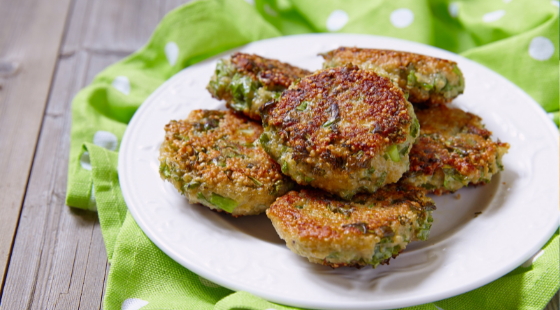
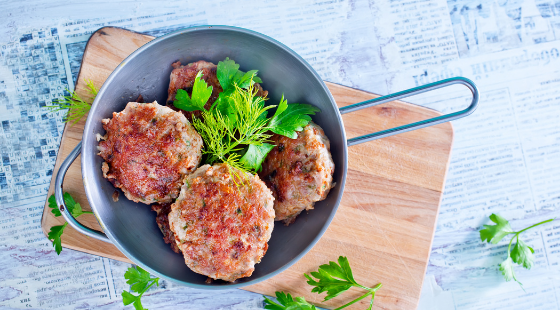
Blueberry Turkey Breakfast Sausages Patties

Blueberry Turkey Breakfast Sausages Patties

Two Glasses with Detox Green Smoothie

Symptoms including bloating, abdominal pain, constipation and diarrhea are all too familiar to an individual with irritable bowel syndrome (IBS).

For the management of IBS, a type of elimination diet, called the low-FODMAP diet, has shown success in improving these symptoms.

FODMAP is an acronym for short-chain carbohydrates that the human body has difficulty digesting, and therefore can lead to IBS symptoms. Recent studies suggest that up to 86% of patients find relief from these symptoms on a low-FODMAP diet (1). We’ve written more about the low-FODMAP diet here. Remember, it is important to talk to a health care professional, such as your family doctor or naturopathic doctor to rule out any more serious conditions within your digestive system. 

In the standard American diet (SAD), wheat is the biggest contributor to FODMAPs in the diet (2). It is typical for a SAD breakfast to contain wheat-based items such as cereal, bread, bagels, or baked goods. When these items are eliminated during a low-FODMAP diet, making breakfast can seem challenging. This recipe provides a flavourful, quick, and filling alternative to start your day! Plus, these breakfast sausages can be made in batches and frozen, to be heated in a toaster oven or pan for those on-the-go mornings.

Many fruits are considered high-FODMAP foods because they are high in fructose, a natural sugar. However, blueberries are low in fructose and are therefore safe to eat in moderate quantities on a low-FODMAP diet. Blueberries were also recently listed as one of our Top 10 Brain-Boosting Superfoods!

This recipe includes extra-lean ground turkey which, in addition to being a low-FODMAP food, is considered a heart healthy choice compared to other ground meats. It contains lower levels of saturated fats, which is a known risk factor for cardiac disease (3). Turkey also contains the amino acid tryptophan which is the building block of neurotransmitters that help us feel happy, sleep well, and reduce cravings. 

With garlic and onion both being high-FODMAP foods, it can be difficult to replace the flavour infusion these ingredients provide. Ginger is a wonderful low-FODMAP flavour alternative incorporated into this recipe. Ginger also has the added benefit of having anti-inflammatory and antioxidant properties (4), and an affinity for soothing the digestive system.


1. Nanayakkara, W., Skidmore, P., O’Brien, L., Wilkinson, T., & Gearry, R. (2016). Efficacy of the low FODMAP diet for treating irritable bowel syndrome: the evidence to date. Clinical and Experimental Gastroenterology, 9, 131-142. doi: 10.2147/CEG.S86798

2. Dunn, S., Datta, A., Kallis, S., Law, E., Myers, C., & Whelan, K. (2010) Validation of a food frequency questionnaire to measure intakes of inulin and oligofructose. European Journal of Clinical Nutrition, 65(3), 402-408. doi: 10.1038/ejcn.2010.272

3. O’Keefe, J., & DiNicolantonio, J. (2018). Effects of dietary fats on blood lipids: a review of direct comparison trials. Open Heart. 5(2). doi: 10.1136/openhrt-2018-000871

4. Mashhadi, N., Ghiasvand, R., Askari, G., Hariri, M., Darvishi, L., & Mofid, M. (2013). Anti-Oxidative and Anti-Inflammatory Effects of Ginger in Health and Physical Activity: Review of Current Evidence. International Journal of Preventative Medicine. 4(1), 36-42. 
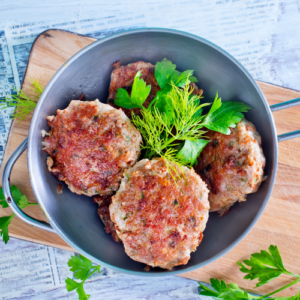
 

    Blueberry Turkey Breakfast Sausage Patties

    This recipe includes extra-lean ground turkey which, in addition to being a low-FODMAP food, is considered a heart healthy choice compared to other ground meats.
    Prep Time 10 minutes
    Cook Time 15 minutes
    Total Time 25 minutes
    Servings 2 Servings (4 patties)
    Calories 211 kcal

    Ingredients
      

    • 8 ozs Extra Lean Ground Turkey
    • tsps Italian Seasoning equal parts mixture of dried basil, dried parsley, dried oregano, dried thyme, and dried rosemary, do not use Italian Seasoning mixes with garlic, onion, or other high-FODMAP ingredients if you are on a LOW-FODMAP diet
    • 1 tbsp Maple Syrup
    • ½ tsp Ginger peeled and minced
    • tsp Sea Salt
    • 2 tbsp Arrowroot Starch
    • ¼ cup Blueberries fresh, frozen or dried
    • tsps Coconut Oil

    Instructions
     

    • In a large mixing bowl, combine the ground turkey, Italian seasoning, maple syrup ginger, salt and arrowroot starch, mixing until well blended.
    • Gently fold blueberries into the turkey mixture.
    • Divide the mixture into 4 equal parts. Using your hands, shape the mixture into patties, approximately 4-inches in diameter. Set aside.
    • Heat the coconut oil in a large frying pan over medium-high heat.
    • Once the pan is warmed, cook turkey patties for approximately 4-5 minutes on each side, until the patties are fully cooked through.
    • Serve and enjoy!

    Notes

    Nutritional information per serving:
    Calories: 180
    Carbs: 17g
    Fibre: 1g
    Sugar: 8g
    Protein: 19g
    Fat: 4g

    Quinoa and Kale Fritters

    Quinoa and Kale Fritters

    Two Glasses with Detox Green Smoothie

    These Quinoa and Kale Fritters are perfect for lunch or dinner. They are delicious served hot off the skillet or frozen and reheated later in the week.

    Plus, these fritters have the perfect brain-boosting ingredients, including kale, eggs, and quinoa to keep your thinking skills sharp!

    Kale is a part of the cruciferous vegetable family which includes broccoli, spinach, and brussels sprouts. These vegetables are known as a strong support for your liver in the detoxification process, but they also contain nutrients that are important for your brain. Vitamin K is one such nutrient, which plays a role in building important fat cells in the brain. These fat cells allow your neurons to communicate with each other more effectively. (1) When our neurons can communicate effectively, we notice the difference in thinking skills such as memory, and attention!

    Eggs are another brain-boosting superfood. Egg yolks are filled with choline, which is used to make the neurotransmitter acetylcholine. This neurotransmitter is known to be important during thinking tasks such as utilizing memory and attention. When choline levels are high, our brain uses it to make acetylcholine which enhances our thinking skills. (2) Studies of individual’s performance on memory tests and choline levels demonstrated that higher choline levels correlated with better cognitive performance. (3)

    While quinoa isn’t the first ingredient that comes to mind as a brain-boosting superfood, it definitely has properties to help support brain health. Quinoa has high levels of amino acids, including tryptophan, which are used to build the neurotransmitters our brain uses to communicate. (4) Quinoa is also high in iron. Iron supports the oxygen-carrying molecules in our blood, helping oxygen reach all of the cells in our body, including brain cells, for top performance. (4)


    These fritters are very versatile and can be served as a side dish with a dip of your choice. They are also a nice meatless choice to replace a burger. However you choose to serve them, we hope you enjoy!


    1.  Ferland, G. (2012). Vitamin K and the Nervous System: An Overview of its Actions. Advances in Nutrition, 3(2), 204-212. doi: 10.3945/an.111.001784
    2. Haddelmo, M. (2006). The Role of Acetylcholine in Learning and Memory. Current Opinon in Neurobiology, 16(6), 710-715. doi: 10.1016/j.conb.2006.09.002
    3. Nurk, E., Refsum, H., Bjelland, I., Drevon, C., Tell, G., Ueland, P., … & Vollset, S. (2013). Plasma free choline, betaine and cognitive performance: the Hordaland Health Study. The British Journal of Nutrition, 109(3), 511-519. doi: 10.1017/S0007114512001249.
    4. Filho, A., Pirozi, M., Borges, J., Sant’Ana, H., Chaves, J., & Coimbra, J. (2017). Quinoa: Nutritional, functional, and antinutritional aspects. Critical Reviews in Food Science and Nutrition. 57(8), 1618-1630. doi: 10.1080/10408398.2014.1001811

    Quinoa and Kale Fritters

    These Quinoa and Kale Fritters are perfect for lunch or dinner. They are delicious served hot off skillet or frozen and reheated later in the week.
    Prep Time 5 minutes
    Cook Time 40 minutes
    Total Time 45 minutes
    Servings 4 servings

    Ingredients
      

    • ½ cup Quinoa
    • 1 cup Water
    • 1 tbsp Coconut Oil divided
    • 2 Eggs whisked
    • ½ Sweet Onion diced
    • 3 Garlic cloved, minced
    • Sea Salt & Pepper to taste
    • 2 cups Kale Leaves
    • cup Flaked Quinoa can substitute rolled oats
    • cup Almond Flour

    Instructions
     

    • Cook quinoa according to box directions.
    • While the quinoa is simmering, heat half the coconut oil in a frying pan over medium heat. Add onion and sauté for approximately 5 minutes until it begins to caramelize and brown slightly.
    • Add kale to pan and stir for 1-2 minutes until just wilted. Immediately remove from heat and set aside.
    • In a large mixing bowl, whisk the eggs. Stir quinoa, kale/onion mixture, garlic, salt and pepper into the egg mixture, and combine.
    • Add the flaked quinoa and almond meal to the egg mixture. Stir well to combining.
    • With clean hands, divide the mixture into four even portions. Shape each portion into a patty and place on a piece of parchment paper or silicone mat.
    • In a large skillet over medium heat, heat the remaining coconut oil. Using a spatula carefully transfer the fritters from the parchment paper to the skillet. Fry the fritters for approximately 6 minutes per side, until golden brown and cooked through.
    • Enjoy!

    Notes

    Nutritional information per serving:
    Calories: 195
    Carbs: 16g
    Fibre: 3g
    Sugar: 2.8g
    Protein: 8g
    Fat: 11g

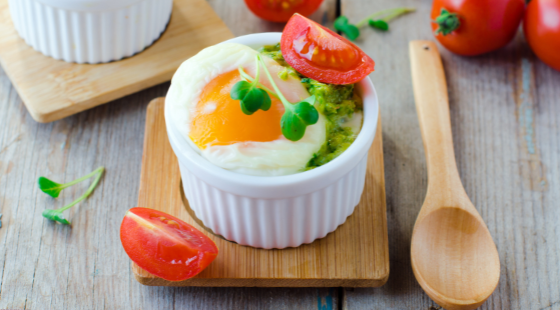
    Pesto Baked Egg Cups

    Pesto Baked Egg Cups

    Two Glasses with Detox Green Smoothie

    This fun breakfast recipe is the perfect way to boost your brain function in the morning. While this breakfast is low in carbohydrates, the eggs and kale are bursting with choline and vitamin K, which are important nutrients to keep your thinking skills sharp. 

    In fact, in our article, Top 10 Brain-Boosting Foods, both eggs and kale were listed as foods beneficial to supporting brain health.

    Egg yolks are a wonderful source of choline, which is a main component of the neurotransmitter acetylcholine. Neurotransmitters are what our brain cells, neurons, use to communicate with each other. Acetylcholine, specifically, has been shown to play an important role in memory. So, by extension it is important that our body has a sufficient supply of choline to make this neurotransmitter to help us remember all the things we need to! (1)

    Kale is a cruciferous vegetable rich in nutrients! Research has shown that individuals who have higher levels of vitamin K, achieved through consuming their leafy greens, have less memory challenges than those with lower levels of vitamin K. (4)

    Other hidden gems in this recipe include garlic and olive oil, which act as immune system supports and antioxidants, respectively, while adding a delicious flavours!

    For added benefit, try switching your store-bought pesto, for our home-made nutrient dense Holy Basil Pesto. This pesto recipe is loaded with nutrients and antioxidants, which is another great way to support brain health. It also has adaptogenic properties, meaning it helps individuals adapt to stress, which is key whether recovering from a brain injury, or just coping with the challenges of everyday life.


    References

    1. Haddelmo, M. (2006). The Role of Acetylcholine in Learning and Memory. Current Opinon in Neurobiology, 16(6), 710-715. doi: 10.1016/j.conb.2006.09.002
    2. Nurk, E., Refsum, H., Bjelland, I., Drevon, C., Tell, G., Ueland, P., … & Vollset, S. (2013). Plasma free choline, betaine and cognitive performance: the Hordaland Health Study. The British Journal of Nutrition, 109(3), 511-519. doi: 10.1017/S0007114512001249.
    3. Ferland, G. (2012). Vitamin K and the Nervous System: An Overview of its Actions. Advances in Nutrition, 3(2), 204-212. doi: 10.3945/an.111.001784
    4. Nurk, E., Refsum, H., Bjelland, I., Drevon, C., Tell, G., Ueland, P., … & Vollset, S. (2013). Plasma free choline, betaine and cognitive performance: the Hordaland Health Study. The British Journal of Nutrition, 109(3), 511-519. doi: 10.1017/S0007114512001249.


    Pesto Baked Egg Cups

    The eggs and kale in this recipe are bursting with choline and vitamin K, which are important brain-boosting nutrients to keep your thinking skills sharp.
    Prep Time 5 minutes
    Cook Time 15 minutes
    Total Time 20 minutes
    Servings 4 servings

    Ingredients
      

    • 2 tbsps Extra Virgin Olive Oil
    • 2 cups Kale Leaves thinly sliced
    • 2 Garlic Cloves
    • ½ tsp Sea Salt
    • 4 Eggs
    • ¼ cup Pesto
    • ¼ cup Cherry Tomatoes
    • Sprouts to garnish

    Instructions
     

    • Preheat oven to 350*F. Arrange 6 oz ramekins on a baking sheet. Pour 1 teaspoon of olive oil into each ramekin and coat the inside of the ramekin with the oil.
    • In a large pan, heat the remaining tablespoon of olive oil. Once warmed, add kale, garlic, and sea salt. Cook for approximately 3 minutes, stirring frequently, until kale is wilted and garlic is fragrant.
    • Divide garlic kale evenly between ramekins.
    • Crack 1 egg into each, taking care not to break the yolk.
    • Top with pesto and bake 10-15 minutes, or until the egg is set.
    • Remove from oven, and garnish with sliced tomatoes and sprouts.
    • Enjoy!

    Notes

    Nutritional information per serving:
    Calories: 231
    Carbs: 3g
    Fibre: 1g
    Sugar: 1g
    Protein: 8g
    Fat: 21g

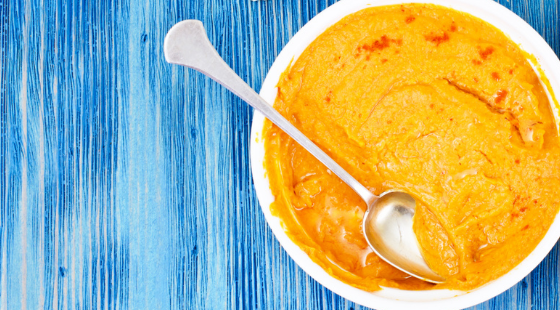
    Turmeric Hummus

    Turmeric Hummus

    Two Glasses with Detox Green Smoothie

     Who doesn’t love a ONE-step recipe?!

    Well, this tasty Turmeric Hummus recipe is just that!

    Turmeric Hummus is an easy side dish, dip, spread, or addition to your next wrap or sandwich.

    Chickpeas, the main ingredient in hummus, are known to pack a protein punch, but did you know they are also full of magnesium? Magnesium interacts with enzymes throughout your body to promote chemical reactions important for making proteins, releasing energy, and maintaining cardiovascular health. Magnesium’s interaction with the brain has more recently been explored, and it is believed to help prevent neuron death after a brain injury! (1)

    Turmeric is this recipe’s secret ingredient. While adding a bold flavour to your hummus, turmeric also fills this recipe with an anti-inflammatory and antioxidant compound called curcumin. Curcumin is powerful because of its ability to cross the protective barrier that separates our brains from the rest of our bodies. Once in the brain, curcumin acts to reduce oxidative stress and neuroinflammation, helping our brain to think efficiently! (2)

    This hummus also contains ingredients which work as anti-microbials. Garlic is known to support our immune system as an anti-microbial, anti-fungal, and anti-viral. Meanwhile, apple cider vinegar has also been shown to have anti-microbial properties and decreases inflammation in response to an infection. (3)

    For an added touch, feel free to top with a drizzle of olive oil and a sprinkle of turmeric, paprika, or cayenne.

    1. Erdman, J., Oria, M., & Pillsbury, L. (2011). Nutrition and Traumatic Brain Injury: Improving Acute and Subacute Outcomes in Miliiatary Personnel.  National Academies Press (US). Washington, DC.
    2. Misra, S., & Palanivelu, K. (2008). The effect of curcumin (turmeric) on Alzheimer’s Disease: An Overview, Annals of Indian Academy of Neurology, 11(1), 13-19. doi: 10.4103/0972-2327.40220
    3. Yagniik, D., Serafin, V., & Shah, A. (2018). Antimicrobial activity of apple cider vinegar against Escherichia coli, Staphylococcus aureus and Candida albicans; downregulating cytokine and microbial protein expression. Scientific Reports, 8(1), 1732. doi: 10.1038/s41598-017-18618-x


    Turmeric Hummus

    Who doesn’t love a ONE-step recipe?! This tasty Turmeric Hummus recipe is just that, making it an easy side, dip, or addition to your next wrap or sandwich.
    Prep Time 10 minutes
    Total Time 10 minutes
    Servings 4 servings

    Ingredients
      

    • 2 cups Chickpeas cooked
    • 1 Garlic Clove minced
    • 1 tbsp Tahini
    • 3 tbsp Lemon Juice
    • ¼ cup Extra Virgin Olive Oil
    • ½ tsp Turmeric
    • ½ tsp Salt
    • ¼ tsp Black Pepper

    Instructions
     

    • Add ingredients to the bowl of a food processor with the S-blade. Blend until the mixture reaches a creamy consistency. You may need to scrape down the sides of the bowl periodically to ensure it processes evenly. Enjoy!

    Notes

    Nutritional information per serving:
    Calories: 280
    Carbs: 24g
    Fibre: 7g
    Sugar: 4g
    Protein: 8g
    Fat: 18g

    Ashwagandha Moon Milk

    Ashwagandha Moon Milk

    Two Glasses with Detox Green Smoothie

    Looking for a calming bedtime beverage?

    Ashwagandha Moon Milk is ideally sipped daily before bedtime.

    Moon milk contains a blend of adaptogenic herbs and spices, including Ashwagandha, to help inspire a restful night’s rest.

    Adaptogens are herbs that help us be more resilient to stressors. Ashwagandha specifically can help balance blood sugar levels, reduce anxiety and depression, improve sleep quality, and reduce pain and inflammation. If you’re interested in the health benefits of Ashwagandha, we’ve written about it in more detail here.

    The addition of warming herbs and spices such as cinnamon, ginger and nutmeg compliments the bitter and pungent flavours of Ashwagandha perfectly. These spices aren’t without their own health benefits, however! Warming spices are known to benefit circulatory health, help control blood sugar levels, and promote digestive health. Plus, these warming spices have a comforting aroma, and a calming, nourishing effect.

    Dosage:

    Consume 1 teaspoon Ashwagandha powder (equivalent to 1-gram or 1,000-milligram extract) per day. As with many herbal remedies, it can take,6 to 12 weeks to observe the full effects. Dosages used in studies range from 250mg per day up to 600mg per day.

    Ashwagandha Moon Milk

    Ashwagandha Moon Milk is ideally sipped daily before bedtime. Moon milk contains a blend of adaptogenic herbs and spices to help inspire a restful night’s rest.
    Prep Time 5 minutes
    Cook Time 5 minutes
    Total Time 10 minutes
    Servings 1 serving

    Ingredients
      

    • 1 cup Milk of Choice whole, almond, coconut, etc.
    • ½ tsp Ground Ashwagandha Powder
    • ½ tsp Ground Cinnamon
    • ¼ tsp Ground Ginger
    • pinch Ground Nutmeg
    • 1 tsp Coconut Oil
    • 1 tsp Honey or Maple Syrup

    Instructions
     

    • Bring the milk to a low simmer, but don't let it boil.
    • Once the milk is hot, whisk in the Ashwagandha, cinnamon, ginger, and nutmeg. Gently simmer for 5 mins.
    • Stir in the coconut oil, and pour the moon milk into a cup. Sweeten with honey or maple syrup, if desired. Enjoy!

    Notes

    Nutritional information per serving:
     
    Calories - 104
    Sugar - 8g
    Fiber - 1.5g
    Carbs - 10.5g
    Fat - 7g
    Protein - 1g

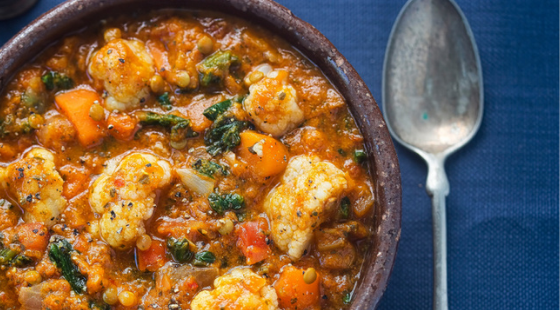
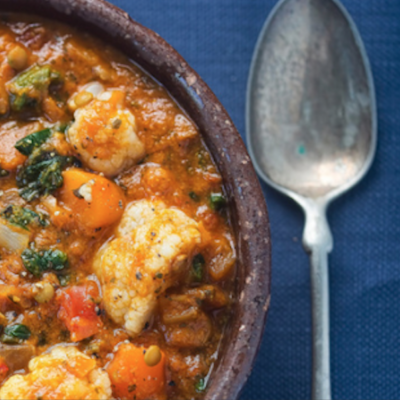
    Cauliflower, Kale and Lentil Soup

    Cauliflower, Kale and Lentil Soup

    Smoked Salmon Avocado Toast

    While this hardy soup is a comforting fit on wet or cold days, it is also filled with ingredients that help support your liver. Your liver is responsible for detoxification of toxins that have accumulated in your body. This detox soup recipe has multiple ingredients aimed at supporting liver function.

    This soup is filled with hearty cruciferous vegetables, pivotal for supporting the liver. Both cauliflower and kale are in the cruciferous vegetable family, and when consumed research shows that they increase the level of enzymes used by the liver to breakdown toxins (1). This is a required step before toxins can be removed from the body.

    Garlic has also been identified as an excellent support for the liver. Garlic contains multiple sulphides, which also have the ability to increase detoxification enzymes in the liver. These enzymes work to breakdown toxins before they can be discarded from the body. As an added benefit, garlic increases glutathione levels, which serves to protect cells from damage from toxins (2).

    Don’t forget about olive oil! Small studies have shown that even one daily teaspoon of olive oil improved levels of liver enzymes and resulted in better blood flow to the liver (3). This goes to show that every ingredient counts!

    While this recipe instructs to use a stovetop, try using your crockpot or pressure cooker for added convenience!

    Did you know that spring and fall are the ideal times to implement a detox? To learn more about when and why to detox, check out our detoxification and cleanse 101 article! Or, you can download your copy of our 1-week Detoxification Meal Plan today!

    1-Week Detox Meal Plan


    1. Manchali, A., Murthy, K.N.C., & Patil, B.S. (2012). Crucial facts about health benefits of popular cruciferous vegetables. Journal of Functional Foods, 4(1), 94-106. doi: 10.1016/j.jff.2011.08.004
    1. Lushchak, V. (2012). Glutathione Homeostasis and Functions: Potential Targets for Medical Interventions. Journal of Amino Acids, 2012, 736837. doi: 10.1155/2012/736837


    1. Sofi, F., Giangrandi, I., Cesari, F., Corsani, I., Abbate, R., Gensini, G.F., & Casini, A. (2010), Effects of a 1-year dietary intervention with n-3 polyunsaturated fatty acid-enriched olive oil on non-alcoholic fatty liver disease patients: a preliminary study. International Journal of Food Sciences and Nutrition, 61(8), 792-802. doi: 10.3109/09637486.2010.487480

    Cauliflower, Kale and Lentil Soup

    While this hardy soup is a comforting fit on wet or cold days, it is also filled with ingredients that help support your liver, which is responsible for detoxification of toxins that have accumulated in your body.
    Prep Time 20 minutes
    Cook Time 20 minutes
    Total Time 40 minutes
    Servings 6 servings

    Ingredients
      

    • ¼ cup Extra Virgin Olive Oil
    • 1 Yellow Onions diced
    • 4 stalks Celery diced
    • 4 Carrots medium, peeled and diced
    • 8 Cloves Garlic minced
    • 1 head Cauliflower chopped into florets
    • 4 cups Kale Leaves chopped
    • 12 cups Vegetable Broth
    • 4 cups Lentils cooked
    • Salt and Pepper to taste

    Instructions
     

    • In a large pot, over medium heat, heat the olive oil.
    • Add the onion, celery, and carrots to the pot. Cook for 8 - 10 minutes, until the vegetables are softened.
    • Add the garlic and cook another 2-3 minutes, stirring frequently.
    • Add the cauliflower, kale, and vegetable broth and bring to a rolling boil for 1 minute. Then reduce heat to a simmer. Cover and simmer for approximately 20 minutes.
    • Add the cooked lentils. Stir to combine.
    • Sample and season to taste with salt and black pepper. Divide between serving bowls and enjoy!

    Notes

    Nutritional information per serving:
    Calories: 312
    Carbs: 44g
    Fibre: 11g
    Sugar: 8g
    Protein: 15g
    Fat: 10g