Mashed Cauliflower

Mashed Cauliflower

Smoked Salmon Avocado Toast

A healthy alternative to mashed potatoes is this Mashed Cauliflower.

But, before you turn up your nose… you should give it a try, and have a think about the difference in calories, carbs and nutrients that you will be consuming.

For example, in 1 cup of mashed potato there are approximately 210 calories and 33 grams of carbs. Conversely, in 1 cup of mashed cauliflower (from this recipe) there are only approximately 130 calories and only 16 grams of carbohydrates.

Now that is a massive difference! Especially if this dish is accompanied by alcohol and desserts and other starchy vegetables and creamy sauces, the calories easily add up and can become excessive. This is a simple, tasty swap-out to help manage that growing calorie count.

You don’t need to compromise on taste either. This recipe contains olive, garlic and thyme which adds a rich creamy texture and some herbaceous flavour to the dish.

Cauliflower is a cruciferous vegetable that is naturally high in fibre and B-vitamins. It provides antioxidants and phytonutrients that can protect against cancer. It also contains fibre to enhance weight loss and digestion, choline that is essential for learning and memory, and many other important nutrients.

An article published by the Centers for Disease Control and Prevention (CDC) places cauliflower 24th on a list of “powerhouse fruits and vegetables.” Just one cup of raw cauliflower will provide: 77 percent of daily vitamin C needs, 20 percent of daily vitamin K needs and 10 percent or more of daily needs for vitamin B6 and folate.

So, will you add mashed cauliflower to your holiday table this year?

Mashed Cauliflower

A healthy alternative to mashed potatoes is this Mashed Cauliflower. This recipe contains olive, garlic and thyme which adds a rich creamy texture and some herbaceous flavour to the dish.
Prep Time 15 minutes
Cook Time 15 minutes
Total Time 30 minutes
Servings 4 servings

Ingredients
  

  • 1 head Cauliflower large, sliced into florets
  • 3 Cloves Garlic, whole minced
  • 1 tbsp Olive Oil
  • 1 tsp Ground Thyme
  • Sea Salt and Black Pepper to taste
  • ¼ cup Parsley to garnish

Instructions
 

  • Bring a large pot of water to a boil.
  • Place cauliflower florets and garlic in a large steamer basket. Place carefully in the pot of water, cover, and steam until fork tender, approximately 10 minutes.
  • Transfer steamed cauliflower and garlic to a food processor or blender. Add olive oil, thyme, salt and pepper and process. Scrape down the sides of the bowl or blender, if needed, and continue processing to desired texture.
  • Scoop into a serving bowl, or divide onto serving plates. Garnish with parsley and enjoy!

Notes

Nutritional information per serving:
 
Calories: 72
Carbs: 8g
Fibre: 3g
Sugar: 3g
Protein: 3g
Fat: 4g

6 Ways Your Diet May Be Impacting Your Sleep

6 Ways Your Diet May Be Impacting Your Sleep

Mental Health Gut Article

Sleeping problems are on the rise and for a number of reasons. When we don’t get enough sleep not only do we feel tired and grumpy the next day but, we often tend to gravitate to stimulants such as coffee, sugar or carbs to help keep us going. When we don’t get appropriate sleep quality or quantity, our body does not have the chance to do all the amazing activities and tasks that kick in when we are asleep. As a result ongoing sleep issues can lead to numerous health problems.

A study conducted by Dr. Charles M. Morin at Université Laval revealed that 40% of Canadians had experienced one or more symptoms of insomnia at least three times a week and only 13% said they had consulted their doctor about it.

In addition to the information below, we’ve written more about sleep in our articles 12 Nutrition “Hacks” For Better Sleep and Top 5 Foods To Support Sleep.

The most effective way to deal with insomnia is identifying the underlying cause of it and then apply the appropriate recommendations. The most common causes of insomnia are depression, anxiety and stress, but your insomnia can also be due to hormonal imbalances, calorie restricting/eating disorders, food allergies, blood sugar imbalances, toxic build up and nutrient deficiencies. 

So, let’s explore a few of these…

  1. Consuming Stimulants Such As Coffee and Alcohol

People often think having that one or two glasses of wine or beer a night can help them to relax, take the edge off and get a better night sleep but this couldn’t be further from the truth. Although alcohol can help you feel relaxed, it actually interferes with sleep. Alcohol can reduce overall sleep time, and cause shorter, lighter, and less restful sleep. Alcohol also impairs the transport of tryptophan into the brain which is important in making melatonin to help us sleep.

As much as we love our cup of coffee it can hinder us getting a good night’s sleep and believe it or not even 1 to 2 cups a day can be problematic. That’s because caffeine can remain in our bodies for up to 20 hours so even sipping on your morning cup of joe can inhibit your sleep at night. As we know coffee gives us a pick me up; that is because it produces stimulating hormones such as adrenaline, norepephrine and cortisol which help us to feel alert and energized. Caffeine has been associated with insomnia, restless leg syndrome, and periodic leg movement. Remember caffeine is also found in hot chocolate, chocolate and some teas, so if you are not a big coffee drinker you might still be having a problem with the caffeine in these foods and beverages.

Both caffeine and alcohol can also decrease the absorption of nutrients essential for sleep such as B vitamins, magnesium and calcium. They are also a natural diuretic so can cause you to have to wake up during the night to use the washroom.

Monitor you intake of these beverages and see if you notice a difference when you consume them and when you don’t.

  1. Food Allergies

Believe it or not food allergies can be a common culprit of insomnia. Food allergies can cause difficulties falling asleep and cause frequent awakenings. Foods that are high on the allergenic profile include wheat, corn, milk, chocolate, nuts, egg whites, seafood, red and yellow dyes and yeast, but basically it can be any food. The problem with food intolerances and sensitivities is that it can be hard to detect as there can be up to a 3 day delay in a response to a specific food that you ate. Imagine something you ate on Monday and having insomnia problems on the Wednesday. The other issue is that you may consume that problematic food on a daily basis and subsequently have sleeping problems every single night. Food intolerances can also cause the release of histamine which can also disrupt the brain chemistry and lead to sleep disturbances.

Although you can do blood work for food allergy testing, the best way to determine if you have an issue is complete the food elimination diet for 2 weeks and then reintroduce one food type back into the diet for 3 days and monitor symptoms. If there is no change in sleeping patterns then this food is not the culprit and you repeat this procedure until you identify the problem food or foods.

  1. Blood Sugar Imbalances

Consuming too much sugar and skipping meals can contribute to unbalanced blood sugars which can induce nighttime hypoglycemia. When blood sugars drop the body releases hormones such as adrenalin and cortisol that stimulate the brain and indicate that it is time to eat. This can awaken you or prevent you from entering into deep sleep.

  1. Smoking

Nicotine is a stimulant and as a result many smokers have difficulties with sleeping problems. In a poll conduced by the National Sleep foundation 46% of smokers reported experiencing sleep insomnia a few nights a week as compared to 35% of non-smokers. Similar to alcohol and caffeine, the nicotine found in cigarettes stimulates the release of adrenaline and norepinephrine, which are hormones that activate the body, increase heart rate, and elevate blood pressure as well as keep us awake.

  1. Dieting

Anorexia, losing weight, food restriction, or dieting can contribute to poor sleep with many experiencing frequent waking at the second half of the night. Both animal and human research has shown that starvation-level calorie restriction leads to sleep interruptions and a reduction in slow-wave sleep, also known as deep sleep (1).

In another small study of 10 young women, four weeks of dieting led to greater difficulty falling asleep and a decrease in the amount of time spent in deep sleep (2). Feeling as though you are too hungry to fall asleep or waking up hungry are major signs that you’re not getting enough to eat.

  1. Nutrient Deficiencies

There are a number of nutrients that help us to get to sleep and maintain sleep throughout the night and deficiencies in these nutrients can cause us to experience difficulty falling asleep and having restful sleep. Vitamin and minerals deficiencies related to sleep quality include B vitamins, calcium, magnesium, zinc, copper, iron, and vitamin E.

Deficiencies in copper and iron have ben linked to greater difficulties in getting to sleep and decreased sleep quality. Studies indicate that low levels of iron correlated with an increased incidence of restless leg syndrome. Vitamin E deficiency may also be a factor in restless leg syndrome (3).

Although B vitamins are good for energy they are also important for sleep. Deficiencies in folate have been linked to insomnia and restless leg syndrome. Plus, your body needs vitamin B6 to help convert tryptophan into melatonin which is our sleep hormone (4).

Calcium and magnesium are natural calming sedatives to the central nervous system. Magnesium is a natural muscle and nervous system relaxant so also important if sleeping issues are related to pain but also for stress, anxiety and irritability.

If you find you need a little more sleep support, you could consider taking some natural supplements:

  • Magnesium deficiency is so common nowadays, boosting your intake with a supplement could do wonders for you. Try taking 400mg of magnesium glycinate before going to bed. This is best for people that struggle with sleep due to stress, anxiety, pain or difficulty relaxing.
  • Melatonin is the most popular natural aid for sleep and can be very effective for those suffering from insomnia. Try taking 1-3mg before bedtime for a few weeks to help reset your sleep/wake cycle. Some people find they do not absorb melatonin in a pill form and require a liquid form. This is best for people struggling with jet lag or have disruptions in their sleep wake cycle. 

As with all supplements, it is best to check with a qualified health care provider such as a nutritionist or naturopathic doctor, before getting started! 


References

1 https://pubmed.ncbi.nlm.nih.gov/15033150/

2 https://pubmed.ncbi.nlm.nih.gov/8310984/

3 Arthur C, Guyton, MD and John E Hall PhD Textbook of medical physiology 9th edition (Philadelphia)

4 Kennedy, Tighe, Brow. “Melatonin and Cortisol switches during mania, depression and Eythmia” Depressed Nocturnal plasma melatonin levels” Journal of Nervous and Mental Disease 1777:5 (1989), 300-303


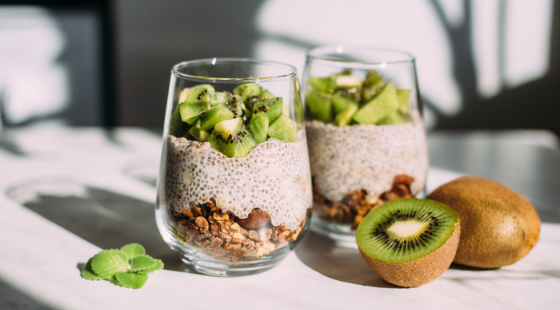
Chia Oat Parfait with Kiwi

Chia Oat Parfait with Kiwi

Smoked Salmon Avocado Toast

This Chia Oats with Kiwi can not only be a great breakfast, but also a great dessert, or bedtime snack to promote healthy sleep.

This is a great recipe to meal prep in advance. If you aren’t yet convinced, another bonus is… it only takes 10 minutes to make! This recipe is easy and delicious.

Believe it or not kiwis can help with sleep. In a 4-week study, 24 adults consumed two kiwifruits one hour before going to bed each night. At the end of the study, participants fell asleep 42% more quickly than when they didn’t eat the fruit before bedtime. Additionally, their ability to sleep through the night without waking improved by 5%, while their total sleep time increased by 13% (1).

The sleep-promoting effects of kiwis might be attributed to serotonin. Serotonin is a brain chemical that helps regulate your sleep cycle (1,2,3). It has also been suggested that the anti-inflammatory antioxidants in kiwis, such as vitamin C and carotenoids, may also be partly responsible for their sleep-promoting effects (1,4).

Chia seeds for their little size chia seeds pack a big nutritional punch. A one-ounce (28 grams) serving of chia seeds contains: 11 grams of fibre, 4 grams of protein and 9 grams of fat 5 of which are those healthy anti-inflammatory omega 3’s. They are loaded with antioxidants to help neutralize free radicals. It also contains 18% of RDI for calcium and 30% of RDI for magnesium which are also important minerals to reduce anxiety, stress and promote sleep. The word “chia” is the ancient Mayan word for “strength.”

Oatmeal is high in fibre and has been reported to induce drowsiness when consumed before bed. Additionally, oats are a known source of melatonin (5).

Refrigerate in an airtight container for up to four days. For best results, reheat with additional liquid over the stove or in the microwave.


References:

  1. http://apjcn.nhri.org.tw/server/APJCN/20/2/169.pdf
  2. https://www.ncbi.nlm.nih.gov/pmc/articles/PMC5015038/
  3. https://pubmed.ncbi.nlm.nih.gov/22652369/
  4. https://www.ncbi.nlm.nih.gov/pmc/articles/PMC4629050/
  5. https://www.ncbi.nlm.nih.gov/pmc/articles/PMC5409706/

Chia Oats Parfait With Kiwi

This Chia Oats with Kiwi can not only be a great breakfast, but also a great dessert, or bedtime snack to promote healthy sleep.
Prep Time 10 minutes
Setting Time 3 hours
Total Time 3 hours 10 minutes
Servings 4 servings

Ingredients
  

  • 1 cup Almond Milk
  • ½ cup Chia Seeds
  • 1 cup Oats rolled
  • ½ cup Almonds chopped
  • 1 tsp Cinnamon
  • 1 tbsp Maple Syrup
  • 2 Kiwi chopped

Instructions
 

  • Combine almond milk and chia seeds in a mason jar, or a bowl, cover and refrigerate a few hours or overnight.
  • In a dry pan, over medium heat, add oats and almonds. Stir frequently until fragrant, approximately 5-7 minutes. Add cinnamon and maple syrup, and stir for another 1-2 minutes. This step can be made ahead, or in the morning. If making ahead, allow to cool, then store covered at room temperature.
  • In serving dish, layer the granola, chia pudding, then top with kiwi. Enjoy!

Notes

Nutritional information per serving:
Calories: 312
Carbs: 35g
Fibre: 12g
Sugar: 8g
Protein: 10g
Fat: 16g

12 Nutrition “Hacks” For Better Sleep

12 Nutrition “Hacks” For Better Sleep

Woman sleeping

Sleep is so important to our overall health and wellbeing. It impacts our emotions, cognition, mood, physical abilities, and eating habits. When we sleep our body repairs and rejuvenates itself: it is when muscles are built, cells are replaced, hormones are released, and healing occurs.

Over the past few decades, both sleep quality and quantity has declined. In fact, many people regularly get poor sleep (3,4).

Research shows that insufficient sleep can increase the risk of obesity by 89% in children and 55% in adults (10). Other studies conclude that getting less than 7–8 hours per night increases your risk of developing heart disease and type 2 diabetes (11,12).

Sleep and wakefulness are controlled by a series of chemical reactions in the body. Certain nutrients can affect these chemical reactions and alter how long it takes you to fall asleep, how often you wake up during the night, and how you feel the next day.

So, if you want to optimize your health or lose weight, getting a good night’s sleep is one of the most important things you can do.

Here are 12 nutrition sleeping hacks to help get you into better and healthier sleeping patterns.

12 Nutrition Hacks for Better Sleep

  1. Stay away from spicy foods in the evening

Research shows that people that eat spicy food at night spent less time in both the light phase of sleep known as Stage 2 and the deep, slow-wave Stages 3 and 4. All of which means that they experienced less sleep over all and took longer to drift off (1).

  1. Try to avoid heavy meals at night-time especially if they are high in fat.

A heavy meal or fatty snack right before bed can cause discomfort and indigestion. This in turn can affect your sleep, causing you to wake up several times. Studies have shown that eating a large meal close to bedtime may make it harder to fall asleep. Aim for around 10 grams of fat in the evening, or about what’s in three ounces of salmon.

  1. Cook with sleep-friendly herbs

Flavour your evening meals with parsley, dill, sage, basil, turmeric, garlic, or nutmeg. You can use these sleep-friendly herbs as opposed to spicy flavourings or sugar loaded sauces.

  1. Avoid high protein-meals before bed

Protein-rich foods release amino acids into the blood. When amino acids such as tyrosine flood the body, they are quickly used to synthesize stimulants such as the excitatory neurotransmitters, epinephrine and norepinephrine, and thermogenic thyroid hormones. Excitatory neurotransmitters keep the brain active and thyroid hormones increase the body’s metabolic rate. Both effects disrupt sleep. Furthermore, by suddenly increasing the number of amino acids in the body, high-protein foods reduce the amount of tryptophan reaching the brain.

  1. Consume phytoestrogens to reduce night sweats

If you struggle with hormone related night sweats and hot flashes you may want to consume more foods high in phytoestrogens such as non-GMO soybeans or edamame, flax, sesame, or oats. Soy, specifically, is also rich in important sleep promoting nutrients such as iron, B vitamins, calcium, vitamin E and magnesium.

  1. Have a big breakfast

It is best to consume a large breakfast, light lunch, and an even lighter evening meal. This structure will take the strain off your digestion and enable your body to focus on sleeping as opposed to digesting.


  1. Make sure you are getting adequate calories

Dieting and restricting calories can cause stress on your body and disrupt hormones which can have a negative impact on your sleep.

  1. Avoid drinking too much in the evening

Try and consume most of your fluids during the earlier part of the day. Drinking too much in the evening can cause frequent wakings to go to the bathroom.

  1. Get your fibre

Research shows that people who fill up on fibre spend more time in deep sleep, than those who get less fibre, and consume more saturated fat, and more sugar which results in waking up more often (2). You can consume fibre from whole foods such as fruits, vegetables, whole grains, and some seeds.

  1. Avoid alcohol

Alcohol is known to cause or increase the symptoms of sleep apnea, snoring, and disrupted sleep patterns (5,6). Alcohol also alters nighttime melatonin production, which plays a key role in your body’s circadian rhythm (7,8). Another study found that alcohol consumption at night decreased the natural nighttime elevations in human growth hormone (HGH), which plays a role in your circadian rhythm and has many other key functions (9).

  1. Avoid MSG food products

A common food additive that is known to cause insomnia is MSG (monosodium glutamate). This compound is a common ingredient used in preparing Chinese foods as well as refined, packaged foods. However, it is a potent stimulant and can keep some people awake late into the night.

  1. Choose an optimal nighttime snack

Ideally, choose a bedtime snack that contains complex carbohydrates with a limited amount of protein and fat.

For some individuals, dairy is a great sleep inducer (if you do not have an allergy, intolerance, or sensitivity to it) because the brain can use the tryptophan and calcium from it to help make melatonin. Try and keep the snack to less than 200 calories and eat between 1 to 1.5 hours before bed.

Below we’ve listed some other healthy options!

Best Bedtime Snacks

  • Whole grain piece of toast with a nut/seed butter
  • Cottage cheese and tart cherries
  • Yoghurt with cut up banana
  • Banana and nut butter
  • Apple sauce cup with a spoonful of ground flaxseed
  • Small handful of almonds (28 grams)
  • Chia Oat Parfait with Kiwi

So, what are you waiting for? Try out some of our nutrition sleep hacks today and increase your potential for a long and restful sleep.

Good night.


References:

  1. https://pubmed.ncbi.nlm.nih.gov/1399758/
  2. https://jcsm.aasm.org/doi/10.5664/jcsm.5384
  3. https://www.ncbi.nlm.nih.gov/pmc/articles/PMC4302758/
  4. https://pubmed.ncbi.nlm.nih.gov/20669438/
  5. https://pubmed.ncbi.nlm.nih.gov/7077345/
  6. https://pubmed.ncbi.nlm.nih.gov/7258218/
  7. https://pubmed.ncbi.nlm.nih.gov/8370699/
  8. https://pubmed.ncbi.nlm.nih.gov/8345809/
  9. https://pubmed.ncbi.nlm.nih.gov/8675588/
  10. https://www.ncbi.nlm.nih.gov/pmc/articles/PMC2398753/
  11. https://pubmed.ncbi.nlm.nih.gov/21300732/
  12. https://pubmed.ncbi.nlm.nih.gov/15851636/

Salmon Chowder

Salmon Chowder

Smoked Salmon Avocado Toast

This is a beautiful rich and hearty meal that helps feed the soul and is absolutely delicious.

Another great thing about this meal is that it can also help support and promote sleep if consumed in the evening. 

The combination of omega-3 fatty acids and vitamin D in salmon has the potential to enhance sleep quality, as both have been shown to increase the production of serotonin (1,2,3). 

In one study, men who ate 5-10.5 ounces (150-300 grams) of Atlantic salmon three times a week for 6 months fell asleep about 10 minutes faster than men who ate chicken, beef, or pork. This effect was thought to be the result of vitamin D. Those in the fish group had higher levels of vitamin D, which was linked to a significant improvement in sleep quality (4).

It is important avoid high protein meals at night as this can interfere with sleep. This meal is a well proportioned mix of carbohydrates (21g), proteins (23g) and fats (24g), making it a great balanced meal and low on the glycemic index to support healthy blood sugar balance and subsequently support great sleep. 

You can store this in the fridge for up to 3 days or freeze it.


References:

  1. https://www.ncbi.nlm.nih.gov/pmc/articles/PMC5015038/
  2. https://faseb.onlinelibrary.wiley.com/doi/full/10.1096/fj.14-268342
  3. https://www.ncbi.nlm.nih.gov/pmc/articles/PMC3976923/
  4. https://www.ncbi.nlm.nih.gov/pmc/articles/PMC4013386/


Salmon Chowder

Prep Time 5 minutes
Cook Time 35 minutes
Total Time 40 minutes
Servings 4 servings

Ingredients
  

  • 2 tbsps Coconut Oil
  • 1 Carrot sliced
  • 2 cups Celery Root peeled and cubed
  • 2 cups Rutabaga peeled and cubed
  • 2 cups Organic Vegetable Broth
  • 12 oz. Salmon Filet
  • 1 cup Organic Coconut Milk
  • ¼ tsp Granulated Garlic
  • ¼ tsp Ginger
  • ¼ tsp Sea Salt or more to taste
  • ¼ cup Parsley chopped, optional garnish

Instructions
 

  • In a large soup pot, melt the coconut oil over medium-low heat. Add the sliced carrot, celery root, and rutabaga. Cover and let cook for about 10 minutes, or until fork tender.
  • While the vegetables are sauteeing, skin the salmon. Discard the salmon skin. Set aside the salmon fillets.
  • Add the broth to the pot and bring to a low rolling boil for 5-10 minutes, until vegetables are fork tender.
  • Add salmon into the pot and poach the salmon for 10-15 minutes. Add a small amount of water if needed to ensure the salmon is covered with boiling liquid.
  • With a fork, gently flake the fish into chunks. Stir in the coconut milk, garlic and ginger. Season to taste with sea salt.
  • Divide into serving bowls and garnish with chopped parsley, if desired. Enjoy!

Notes

Nutritional information per serving:
Calories: 386
Carbs: 21g
Fibre: 5g
Sugar: 10g
Protein: 23g
Fat: 24g